Casino Games
Casino games are wager-based games where outcomes are driven by fixed rules, probability, and, in many formats, random number generation or physical randomization.
This page helps you evaluate casino games using odds, RTP, volatility, and house edge, so you can understand risk and set practical limits in a South Korea context.
Quick Evaluation Checklist
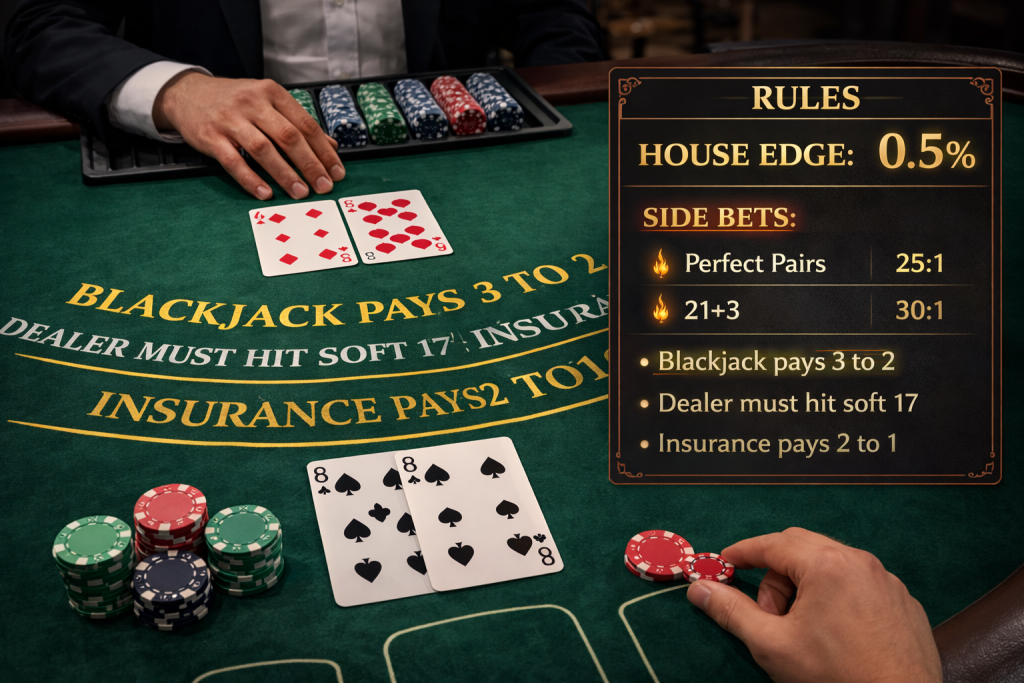
- Confirm the game type and core rules, including payouts and any side bets.
- Find the RTP or payback information where it is disclosed, and treat it as a long-run average, not a session promise. (Gambling Commission)
- Identify house edge drivers, such as rule variants in blackjack, or payout tables in roulette and baccarat.
- Check whether the game is high variance, meaning results can swing widely even when the long-run math is known.
- Decide a loss limit and a time limit before starting, and stop when either limit is reached.
- Prefer environments that clearly show rules, game information, and player protection tools. (NGCC)
- If playing in a South Korea setting, verify access conditions and permitted participation before engaging, since eligibility rules can differ by venue and format. (IAG)
Key Trust Signals at a Glance
| Trust signal | What to look for | Why it matters |
|---|---|---|
| Clear rules and payouts | Full rules panel, payout table, side bet terms | Reduces misunderstandings and hidden edge |
| RTP disclosure where applicable | RTP shown in game info for machine or online games | Supports informed comparison as a long-run metric (Gambling Commission) |
| Limit tools | Session time reminders, deposit or loss limits (online), venue policies | Helps manage risk and reduce escalation (NGCC) |
| Fairness controls | RNG certification disclosures (online), table procedures (live) | Increases confidence in randomness and integrity |
| Data and privacy clarity | Clear data handling, account security options (online) | Reduces exposure to account takeover and misuse |
| Responsible gambling support | Visible help pathways and support services information | Supports early intervention if play becomes harmful (KCGP) |
| Eligibility clarity | Entry rules and participation restrictions clearly stated | Avoids accidental non-compliance in South Korea contexts (IAG) |

Definition
Casino games include table games (such as blackjack, roulette, baccarat), machine games (such as slots), and casino-style card variants. They share a common structure: you place a wager, an outcome is produced under defined rules, and payouts are determined by a paytable or rule-based settlement.
Key terms used to evaluate casino games:
- House edge: The average advantage built into the game’s payout structure over the long run.
- RTP (return to player): The complementary long-run payback percentage, commonly disclosed for gaming machines and many online games. (Gambling Commission)
- Volatility or variance: How widely outcomes can swing around the expected return in the short to medium term.
Background
Casino games evolved from physical randomization (cards, wheels, dice) to include electronic and online implementations. In South Korea contexts, availability and participation conditions can be more constrained than in many other markets, including venue eligibility differences that are important to confirm before any play. (IAG)
For a site-wide foundation on core terms used across games, see Casino Playing Basics.
Types
Common casino game types and what typically drives their risk profile:
- Slots and machine games
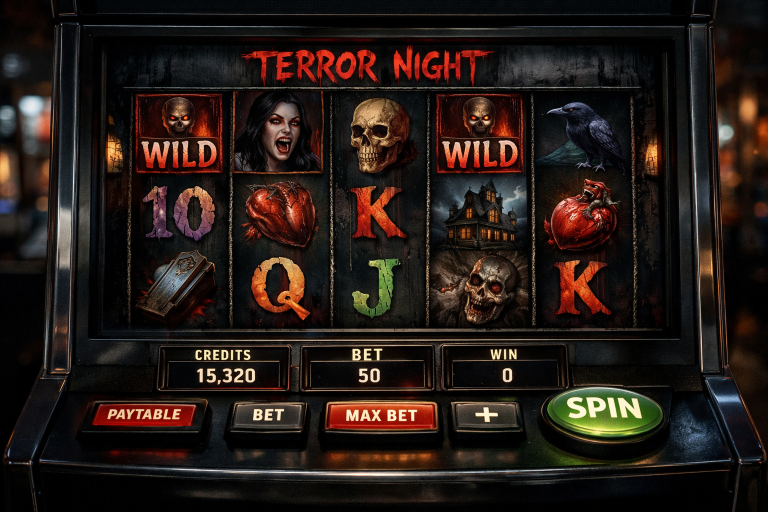
- Outcomes are RNG-driven, with RTP and volatility often described in the game info. (Gambling Commission)
- Blackjack and blackjack variants
- House edge varies by rule set, payout for blackjack, and whether side bets are offered.
- Roulette
- House edge is tied to wheel type and payout odds, with extra zeroes increasing the edge.
- Baccarat
- Edge varies by bet type (for example, banker vs player vs tie) and commission rules.
- Poker variants and specialty games
- Some are player-versus-house with fixed paytables, others are player-versus-player formats with fees or commissions depending on environment.
Related explainers that pair well with this page:
- RTP Explained for Casino Games
- Volatility and Variance in Gambling
- Bankroll Basics and Session Limits
How It Works
Most casino games follow the same evaluation logic:
- Rules create the math. Payouts and settlement rules determine expected value.
- Randomization creates variance. Short-run results can deviate widely from the long-run expectation.
- Information quality affects decision risk. Missing RTP, unclear side bet terms, or confusing rule panels increase the chance of misjudging cost and risk.
For machine and many online games, RTP is best treated as a long-run average over a very large number of plays, not a prediction of what happens in one session. (Gambling Commission)
Legality (high-level, non-jurisdictional)
This site does not provide legal advice. In general, gambling legality varies by country, license regime, and game format. Some places restrict who can participate, where play can occur, and what controls must exist.
In a South Korea context, the practical takeaway is that participation conditions can differ by venue and format, and eligibility may be restricted for certain groups in certain environments. Always rely on official venue and regulator information where applicable. (IAG)
Security
Security in casino games has two parts, fairness and player safety.
Fairness concepts
- RNG integrity (online, slots, many digital table games): Independent testing and certification are typical signals, when disclosed.
- Procedural integrity (live tables): Shuffling procedures, wheel maintenance, and dealer oversight reduce tampering risk.
Player safety concepts
- Account security (online): Strong authentication options, device controls, and clear privacy statements matter.
- Limit tools and safer play design: Time reminders and limit settings reduce the risk of extended, unplanned sessions. (NGCC)
Pros and Cons
Pros (educational context)
- Clear, math-based evaluation using house edge, RTP, and variance concepts
- Rules are often fully specified, which supports structured learning
- Some games allow straightforward comparison across variants
Cons (risk and limitations)
- Short-run outcomes are highly variable, even in low-edge games
- Many players misread RTP as a guarantee for a session, which it is not (Gambling Commission)
- Side bets and rule variants can materially increase expected cost
- Time-on-device and repeated betting can increase harm risk without limits
Uses
People look up “casino games” to:
- Understand differences between slots, blackjack, roulette, baccarat, and variants
- Compare expected cost using house edge and RTP
- Learn how volatility changes the “feel” of results without changing long-run math
- Build safer session planning habits, especially when access conditions and norms differ by region
FAQ
Is RTP the same as the chance of winning?
No. RTP is a long-run average return across many plays. It does not describe how often you win in a session, or whether a session ends ahead. (Gambling Commission)
Why can two games feel different if their RTP is similar?
Volatility can differ. A higher-volatility game can produce larger swings, which can feel harsher or more dramatic in the short run even when long-run RTP is similar.
Do rules and side bets change the house edge?
Yes. Small rule changes, payout differences, and side bets can shift expected value and risk materially, so rules should be checked before play.

Responsible Gambling Note
Casino games involve financial risk, and outcomes are not controllable in the short run. Set a time limit and a loss limit, stop when either limit is reached, and avoid trying to “win back” losses. If gambling is causing stress, debt, or loss of control, consider reaching out to a responsible gambling support service in South Korea, such as the Korea Problem Gambling Agency. (KCGP)
Resources
- UK Gambling Commission, guidance on return to player and how %RTP works as an average over many plays (Gambling Commission)
- National Gambling Control Commission (South Korea), responsible gambling planning and policy context (NGCC)
- Korea Problem Gambling Agency, support and counseling services information (KCGP)





 English
  한국어
한국어  繁體中文
繁體中文