기가 자
Quick Answer
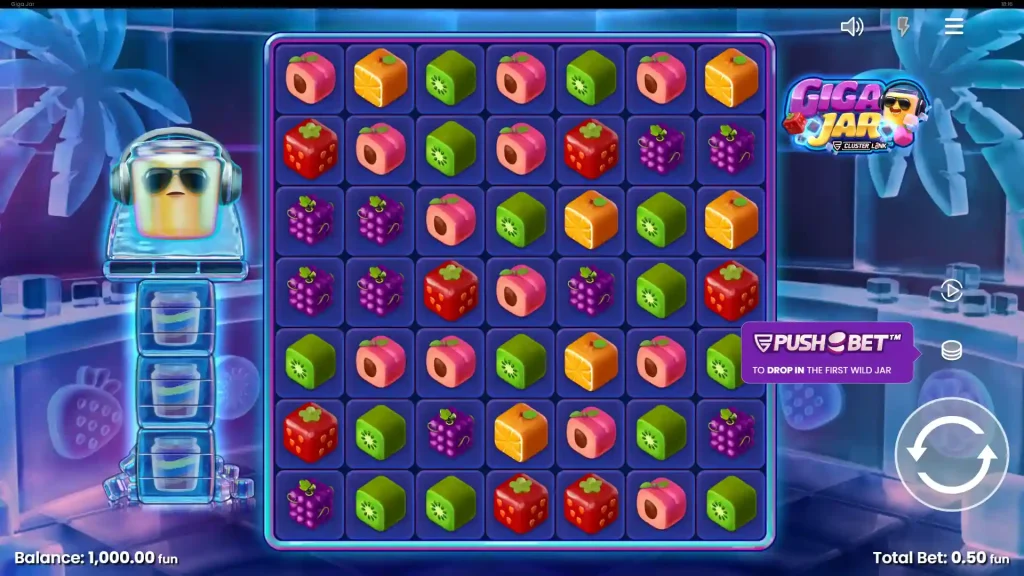
기가 자 refers to Giga Jar, the official English game title used by Push Gaming. It is a 7×7 cluster-pays slot built around cascading wins, Wild Jar progression, and a larger Giga Jar feature that can reactivate and grow its multiplier over several stages. Push Gaming lists RTP versions at 96.48% and 94.45%, notes that RTP can vary by casino, and labels the game’s volatility as medium. For South Korea readers, this page is best treated as an educational gameplay explainer, not a legal access guide, because gambling rules are tightly controlled and harm prevention is a stated public policy priority in Korea.
Key Takeaways
-
Giga Jar is a cluster-pays slot, so wins come from connected groups rather than fixed paylines.
-
The session feel is driven by cascades, meter-building, and moments where the grid suddenly opens up.
-
The core feature rhythm is about getting Wild Jars into play, then upgrading into the larger Giga Jar sequence.
-
RTP is not a session forecast. It is a long-run average, and short sessions can swing far above or below it.
-
Push Gaming marks the title as medium volatility, but individual sessions can still feel uneven because cascades and feature chaining create streaky momentum.

Definition
Giga Jar is a Push Gaming slot in the studio’s jar-themed line-up, sitting alongside titles that shaped the same feature language and movement style. That wider design context is easier to understand through the Push Gaming slot catalogue, because the provider tends to reuse readable meters, escalating feature states, and momentum-heavy cascade design across several releases.
What It Means / How It Works
The first thing a player notices in Giga Jar is that the round does not move with the stop-start feel of a classic payline slot. Instead, the screen behaves more like a chain reaction. A cluster lands, symbols disappear, new symbols drop in, and the reel space can suddenly look much stronger or much weaker from one cascade to the next.
That creates a session rhythm built on build-up rather than steady drip payouts. Early spins can feel quiet, then a single connected sequence can wake the whole screen up. The official game page describes Wild Jars entering play, the meter filling after additional cascades, and then a Giga Jar symbol appearing as a 2×2 wild that pays on adjacent symbols for several cascades before going dormant and reactivating at higher multipliers.
In practical terms, that means the most important gameplay moments are not always the first winning cluster. They are the moments when the board state improves. A small cascade can matter because it advances a jar, clears dead weight, or pushes the game closer to a stronger feature state. Readers comparing this title with the broader Push Gaming game style will notice the same emphasis on momentum, screen transformation, and readable feature ladders.
What to Check in the Game Rules Screen
Before judging whether Giga Jar suits a short or long session, the rules screen matters more than the theme.
RTP wording
Push Gaming says RTP may vary by casino and that the figure can be found in the user panel and loading screen. That matters because one version of the game may not match another. If the game client shows 96.48%, that is a different long-run return model from 94.45%, even though the theme and features look identical.
Cluster-pays requirement
Check how many matching symbols are needed for a win. In cluster games, that number tells you how dense the screen must become before anything starts paying. It also changes how often near-miss looking screens actually convert into cascades.
Feature labels
Look for the exact names used in the help file, including Ice Breaker, Giga Jar Feature, and Ante Bet. These names are not cosmetic. They explain what can randomly clear symbols, what grows the central feature, and what changes the starting state of a spin. If you are reading Giga Jar as part of the wider Push Gaming feature design, these labels are the clearest guide to how the provider wants the game to be interpreted.
Max win and cap language
Push Gaming lists a theoretical max win of 10,000x. Treat that as a ceiling within the game math, not as a normal session expectation. A ceiling explains range, not probability of reaching it.
Volatility hint
Push Gaming marks the game as medium volatility. That label is useful, but it should be read beside the mechanics. A cascade slot with reactivating multipliers can still feel sharp in short sessions, because wins may bunch together instead of arriving evenly. Regulators also note that RTP is an average over many plays and that actual session results vary because of normal volatility.
Quick Reference Table
| Check | Why it matters in play |
|---|---|
| RTP version shown | Tells you which long-run return model the game is using |
| Cluster win rule | Explains how connected the grid must be before a payout starts |
| Ice Breaker description | Helps you understand how dead screens may reopen |
| Giga Jar reactivation steps | Shows why some features build slowly before becoming more dangerous |
| Ante Bet wording | Clarifies that the toggle changes feature access, not the same thing as ordinary stake size |
| Max win statement | Sets an outer limit, not a realistic session target |
Common Mistakes / Misconceptions
One common mistake is treating RTP as a promise for tonight’s session. Regulators are explicit that RTP is a long-run average over many plays, not an amount you should expect back spin by spin or even over one sitting.
Another is reading “medium volatility” as “stable.” Medium does not mean smooth. In a cascade game, the board can stay flat for a stretch and then produce a burst of linked wins when symbol removal and jar progression finally line up.
A third mistake is gambler’s fallacy. Previous dead spins do not mean the next spin is due. The UK Gambling Commission’s player guidance notes that for random machines, current odds remain constant and are not changed by previous wins or losses.
A final misconception is assuming an optional feature toggle is harmless. Ante-style options change the game experience and often alter how quickly feature states are reached. They should be read carefully before use.
Examples
Imagine two short sessions on the same displayed RTP version.
In the first, you land a few small clusters but never get enough screen movement to build meaningful feature pressure. The game feels flat, even though nothing is malfunctioning.
In the second, a modest early cluster leads to extra cascades, the screen clears, jars arrive in sequence, and the Giga Jar state starts reactivating. The total result can look dramatically different even though both sessions came from the same underlying math model.
That is why variance matters more to player experience than a single headline number. The Push Gaming overview is useful here because many of the studio’s better-known titles create this same feeling of long quiet stretches interrupted by stronger chain-reaction moments.
Responsible Gambling Note
If you are using game information to plan session length or spending, set a fixed loss limit and a time limit before play starts. Do not raise either limit because a feature seems close. In South Korea, gambling-harm prevention is a formal policy priority under the NGCC, and the Korea Problem Gambling Agency provides confidential support through its national helpline 1336.
FAQ
Is 기가 자 the same game as Giga Jar?
Yes. For this topic, 기가 자 refers to Giga Jar, the Push Gaming title. The official provider naming uses the English title Giga Jar.
Does Giga Jar use paylines?
No in the traditional sense. It is presented as a cluster-pays game, so the action is about connected groups and cascades rather than fixed line patterns. That changes how the screen feels during play, because position and symbol grouping matter more than reading left-to-right lines.
Does higher RTP mean a session will feel safer?
Not necessarily. RTP helps compare long-run return models, but it does not smooth out short-run variance. A session can still feel harsh or generous over a small sample, especially in cascade-heavy slots with layered features.