Quick Answer
워리어 그레이브야드 (official listing: Warrior Graveyard xNudge®) is a 6×3 slot built around xNudge® Tombstone Wilds that “shuffle” into view and raise a multiplier as they move. The pace feels quick until a nudge or Warrior Attack sequence starts, then the round slows down because the screen is actively rearranging before it pays. Bonus play splits into Graveyard Spins and Death Spins depending on the trigger, and the overall session feel is high-variance with occasional sharp swings rather than steady, even returns.
Key Takeaways of 워리어 그레이브야드
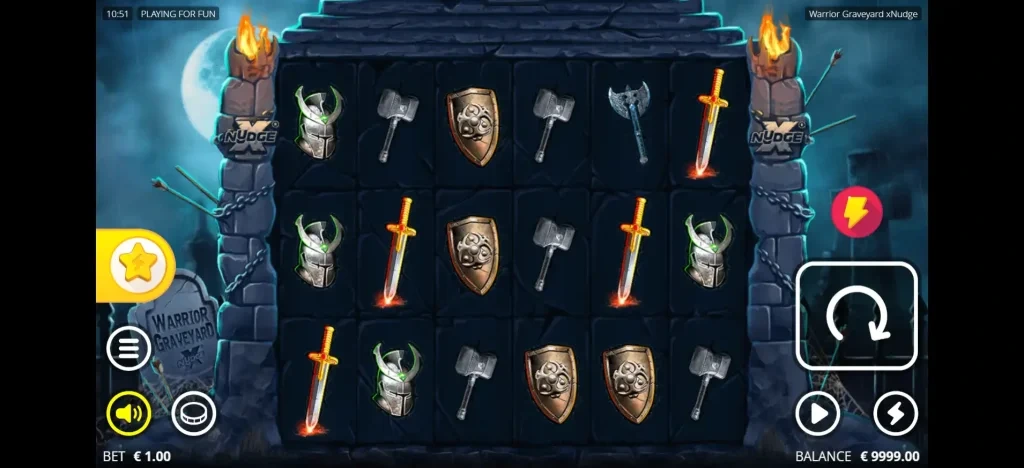
- The grid is 6×3, and Tombstone Wilds can nudge up or down until fully visible, adding +1 multiplier per moved position.
- Warrior Attack can take over the screen with a “cover and shove” style resolution, changing the rhythm of a normal spin.
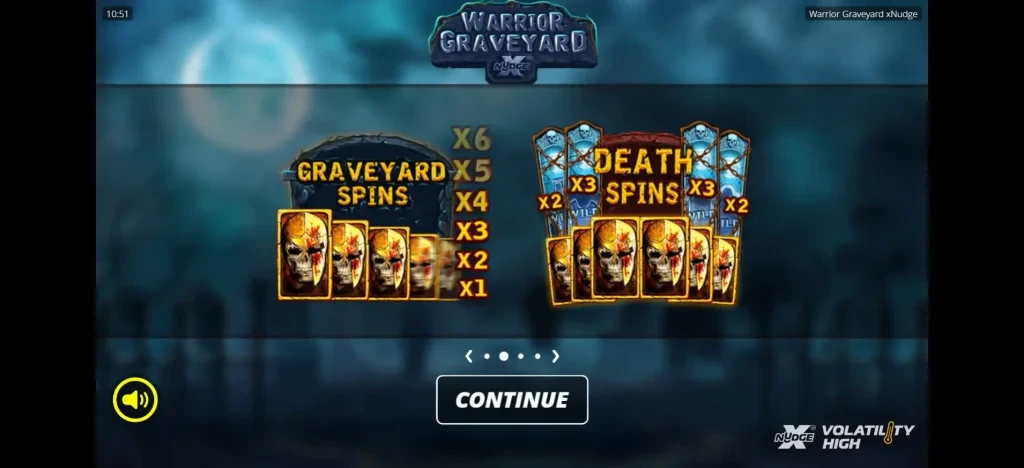
- Bonus entry depends on scatters, with Graveyard Spins and a higher-tier Death Spins mode (as presented in the game’s official materials).
- The stated RTP is a long-run average concept, not a promise of short-session outcomes.
- Availability and feature presentation can vary by market, so in a South Korea context it is especially important to verify what the rules screen actually shows in your version.
What 워리어 그레이브야드 Means / How It Works
This game’s “feel” comes from moments where the screen stops behaving like a simple spin-and-pay slot and starts behaving like a moving machine.
The first driver is xNudge® Tombstone Wilds. When a Tombstone Wild appears partially off-screen, it nudges into view. Each step of that movement increases its multiplier. In play, that creates a very specific tension: a spin can look ordinary for a second, then the wild begins shifting and the round becomes about where it finally lands and whether it lines up with paying symbols.
The second driver is Warrior Attack. When it activates, the game leans into a takeover sequence where matching warrior symbols can expand, nudge, and then resolve with a “push-left” style payout flow. The practical impact is that some wins are quick and forgettable, while others become long, animated, and heavy on multiplier math.
If you want the broader context for this kind of feature-first design, NoLimit City provider overview helps explain why these mechanics often create a stop-start tempo and a more volatile session texture than many classic slots.
What to Check in the Game Rules Screen of 워리어 그레이브야드 (Practical, Non-Promissory)
In a South Korea context, where access and configurations can vary, the rules screen is the most reliable place to ground expectations. Focus on what you can verify, and tie each item to how it changes the session feel.
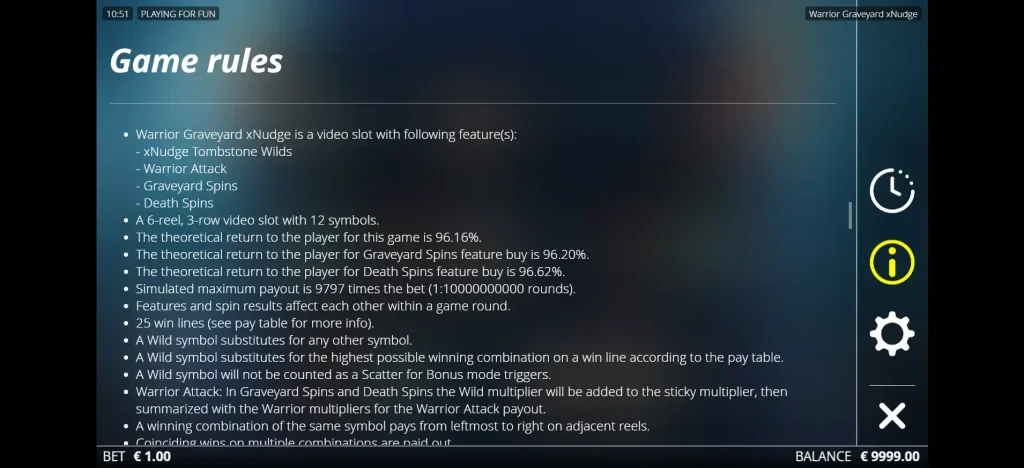
- RTP wording and version-specific notes
Some games can be released with multiple RTP settings depending on operator or jurisdiction. If your rules screen shows a specific percentage, treat it as the RTP for that build. If it does not, assume variability and keep expectations conservative. RTP is a long-run average, it does not describe what a single session “should” return. - Volatility or risk hints (if disclosed)
If the game labels volatility, it is a cue about swing size and drought potential. A high-volatility label often means fewer meaningful hits, with bigger outcomes concentrated in feature collisions. It helps you interpret why long quiet stretches can be normal. - Bonus triggers and mode names
Confirm how many scatters trigger Graveyard Spins versus Death Spins, and what each mode changes. This matters because the bonus structure can shift the cadence of multipliers and sticky behavior, which is where many of the biggest swings tend to come from. - xNudge® multiplier growth rules
Verify the exact phrasing for how multipliers increase while Tombstone Wilds move. If you misread this, big-looking moments can feel random. When you understand it, you can at least explain the outcome mechanically, even if you cannot predict it. - Feature availability notes
If the rules mention that some bonus-related options can be restricted in certain regulated markets, treat that as a signal that your version may not match a video or screenshot from another region. NoLimit City rules and feature labels is also useful when you want a quick mental checklist for reading NoLimit City rule screens across different builds.
Quick reference table
| What to verify | Where to look | Why it changes gameplay feel |
|---|---|---|
| RTP disclosure | Info panel, rules, help | Long-run average concept, not a session prediction |
| Volatility hint | Rules or info (if shown) | Signals swing size and drought potential |
| Bonus mode triggers | Scatter section | Sets expectations for how often the session “shifts gears” |
| xNudge® multiplier rule | Feature description | Explains why some rounds slow down and spike |
| Market-dependent notes | Footnotes, bonus sections | Indicates possible differences by region or configuration |
Common Mistakes / Misconceptions
- Treating RTP like a short-session target
RTP describes an average over very large numbers of spins. A short session can land far above or far below that figure without anything “wrong” happening. - Assuming past spins influence future triggers
Long dry spells can make players feel like a bonus is “due.” This is a classic gambler’s fallacy. The next spin is not guaranteed to correct the last stretch. - Confusing animation intensity with guaranteed value
In this game, long nudge sequences and attack animations can feel like they must end big. Sometimes they do, sometimes they resolve modestly. The drama is part of the presentation, not a guarantee of payout size.
Examples (only if directly clarifying)
If your version lists RTP as a single value, that number still represents a long-run average. In a high-variance slot, a session might include many small outcomes, then a single bonus where multipliers stack and the result jumps sharply, or it might never reach that stacking moment at all. NoLimit City volatility style explained can help you frame those swings as a normal part of how these mechanics distribute outcomes, rather than as a sign you should change behavior mid-session.
Responsible Gambling Note
High-volatility slots can create strong emotional peaks because outcomes may cluster around feature collisions and multiplier stacking. Setting a session budget and a time limit before you start helps keep decisions steady when variance swings hit. If play stops feeling like entertainment, stepping away is the safest choice.
FAQ
Is 워리어 그레이브야드 RTP fixed?
Not always. Some releases can support different RTP settings depending on operator or jurisdiction. The safest approach is to rely on what your rules screen or info panel states for the specific version you are playing.
How do Graveyard Spins and Death Spins feel different?
They are designed to change how wilds and multipliers persist and grow during free play. The practical difference is pacing and tension: one mode can feel more like repeated build-and-resolve cycles, while the other can feel more like a sustained stacking state where the screen holds onto value longer.
Does seeing more xNudge® action mean a big hit is guaranteed?
No. xNudge® explains how multipliers grow when the wild moves, but the final payout still depends on symbol alignment and how multipliers interact on paying lines. Big-looking animations can still end in modest outcomes.
Resources
- NoLimit City, “Warrior Graveyard xNudge®”
- UK Gambling Commission, “Return to player (RTP): how much gaming machines payout”
- GambleAware, “Understanding of return to player messages”
- National Gambling Control Commission (Korea), “Policy & System”
- UK Gambling Commission, “Remote gambling and software technical standards (RTS)”