Quick Answer
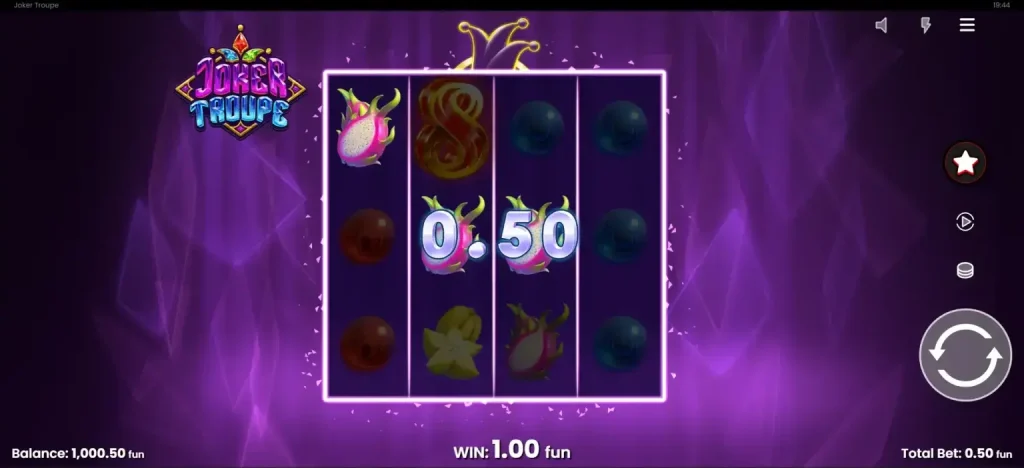
조커 트룹 (official title: Joker Troupe) is a Push Gaming slot with a compact 4×3 layout and 10 paylines, built around three Joker scatter colors that each open a different bonus. In play, the base game can feel straightforward, then the session mood changes sharply the moment a matching color lands. The main thing you notice is not complicated decision-making, it is how the bonus type shifts the pace, the length of the feature, and the size of the swings. Push Gaming overview helps if you want the provider-level context for how RTP options and feature labels are typically presented.
Key Takeaways of 조커 트룹
- Small grid, simple paylines, but the session rhythm is driven by scatter color.
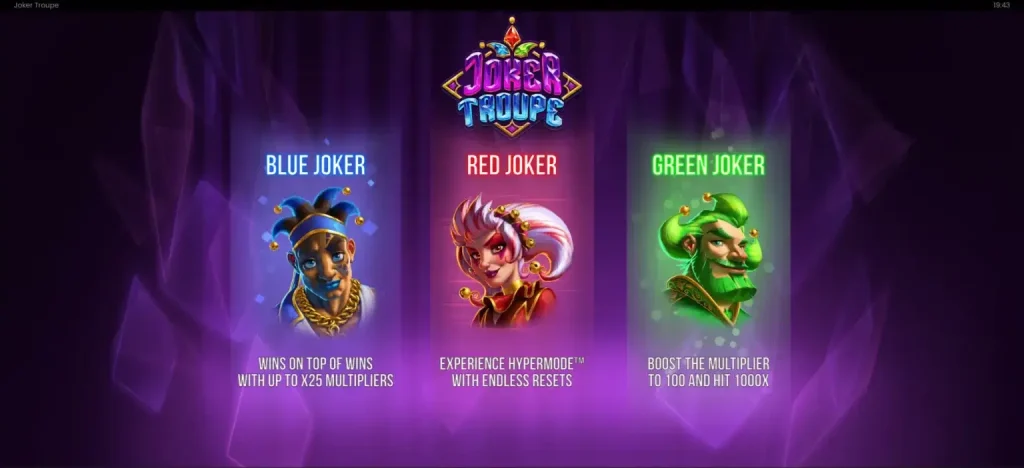
- Blue Joker mode tends to feel “sticky and extendable,” because it can keep resetting and building.
- Green Joker mode feels “stop-start,” because the wheel can end abruptly when a repeat condition hits.
- Red Joker mode feels fast and compressed, because it runs on a timer rather than a fixed spin count.
- RTP can vary by operator or jurisdictional setup, so the rules screen matters more than the lobby label.
What 조커 트룹 Means / How It Works
This game is easiest to understand as three different feature experiences that can show up during the same session.
In the base game, there is not much to manage moment to moment. What you watch for is whether the scatters are trending toward a color match, because that determines what “kind” of bonus you enter.
- Blue Joker bonus feel (Hats feature)
This tends to play like a slow build. Symbols can become sticky, and the feature can keep itself alive through reset conditions. The result is a bonus that often feels longer than a simple “X free spins” mode, with a gradual ramp where later moments can matter more than the start. - Green Joker bonus feel (Wheel feature)
The wheel structure often creates a different tension. Instead of a steady climb, it can feel like it is either continuing or suddenly shutting down, depending on how its stop conditions are written. That gives the session a more unpredictable cadence inside the feature, even when nothing dramatic happens on a single spin. - Red Joker bonus feel (Hypermode Free Spins)
This one changes the pace the most. Because it is timer-based, the experience can feel compressed, especially if speed increases during the mode. It can be exciting in a neutral, sensory way, but it also makes volatility feel sharper because events arrive quickly and the feature can end without the “one more spin” feeling you get from fixed-spin bonuses.
If you want the wider Push Gaming context for how their games tend to label and frame features, Push Gaming slot style and features can help anchor expectations without turning it into a rule dump.
What to Check in the Game Rules Screen (Practical, Non-Promissory)
For South Korea readers, the most practical approach is to treat the in-game rules screen as the source of truth. Platforms can differ in how they present RTP options, bet configuration, and feature wording.
- RTP wording and whether it shows a single value or an option set
Some games are built with multiple RTP configurations. If the rules screen shows “RTP may vary” or lists more than one value, that is your cue that the actual setting is determined by the operator’s configuration, not by the game title alone. What changes for you is not the vibe of a single spin, but the long-run expectation, which can slightly reshape how swings feel over many sessions. - Volatility indicators (if disclosed)
Volatility, variance, or “risk level” labels do not predict outcomes, but they do explain why a session can feel quiet for a while, then lurch. A high-volatility label generally matches a pattern of rarer big moments and more pronounced droughts. - Feature labels for the three Joker scatters
Confirm the official names of each mode and their triggers. You are not looking for tricks, you are verifying which color does what so you interpret the session correctly when a scatter lands. - Blue Joker extension and “sticky” logic
Look for lines describing what sticks, what resets, and what must happen to continue. This tells you why the bonus sometimes feels like it keeps finding a way to carry on, or why it dies immediately. - Green Joker wheel stop conditions and any step-up triggers
Wheel features often include a repeat or cap condition that ends the mode, plus a separate condition that can push you into a different state. Knowing which is which helps you understand the pace inside the feature. - Red Joker timer rules
Timer-based bonuses can be misread as “more spins,” when the reality is “more time.” The rules text should tell you what extends or resets the timer, and what speeds up the play. That matters for pacing and comfort, not for predicting results.
A quick cross-check habit you can reuse across the provider is outlined in Push Gaming rules screen reading guide.
Mini-checklist (quick, practical)
- Confirm the current RTP statement inside the game rules screen.
- Check whether volatility is disclosed, and treat it as a session-feel signal, not a promise.
- Read the three scatter color triggers once, then play with the expectation that each bonus has a different tempo.
- Identify the “extension” rule in Blue Joker mode, and the “end condition” rule in Green Joker mode.
- For Red Joker mode, read the timer rule, then decide whether fast pacing is comfortable for your session limit style.
Common Mistakes / Misconceptions
- “RTP tells me what will happen tonight.”
RTP is a long-run theoretical measure, not a short-session forecast. Short sessions can look nothing like the average, especially in high-volatility designs. - “I am due for a bonus because it has been quiet.”
Past spins do not force future spins to behave differently. Quiet streaks can happen, and they can feel longer in games built around bigger, rarer feature outcomes. - “Timer-based bonuses are automatically better.”
Hypermode-style pacing can feel intense, but intensity is not an edge. It changes how quickly things happen, not what is “owed” to the player. - “The same game always has the same RTP everywhere.”
Some titles are offered with different RTP configurations. The safest habit is to check the in-game rules screen rather than relying on a lobby label.
Examples (only to clarify variance, non-promissory)
Imagine two sessions with the same stake and the same game. In one session, a bonus triggers early, the feature extends once, and you feel like the game is “alive.” In another, scatters never align, and the session feels flat. Neither experience proves anything about the next session. This is exactly the kind of swing volatility labels are trying to communicate, without predicting the timing of the swings.
Responsible Gambling Note
If the pace feels fast, or the swings feel sharper than expected, it can help to decide a time limit and a loss limit before you start, then treat them as hard stops. Avoid “chasing” after a quiet run, because variance can keep a session quiet longer than feels intuitive.
FAQ
What kind of slot is 조커 트룹?
It is a compact 4×3, 10-payline slot built around three Joker scatter colors. Each color triggers a different bonus, so the session feel changes depending on which bonus you enter.
Why does RTP sometimes appear to vary?
Some games are configured with more than one RTP option depending on the operator’s setup and jurisdictional requirements. The rules screen is the best place to verify how RTP is presented in your current version.
What is the main difference between the three bonuses?
Blue Joker tends to feel like a building, extendable feature. Green Joker tends to feel like a wheel with a clearer stop condition that can end quickly. Red Joker tends to feel fast and compressed because it is timer-based, changing pace more than structure.
Resources
- Push Gaming, “Joker Troupe”
- UK Gambling Commission, “Live return to player performance monitoring of games of chance”
- GambleAware, “Advice to consider if you’re gambling”
- Korea Problem Gambling Agency (KCGP), “Main”
- UK Gambling Commission, “Remote gambling and software technical standards (RTS)”