Quick Answer
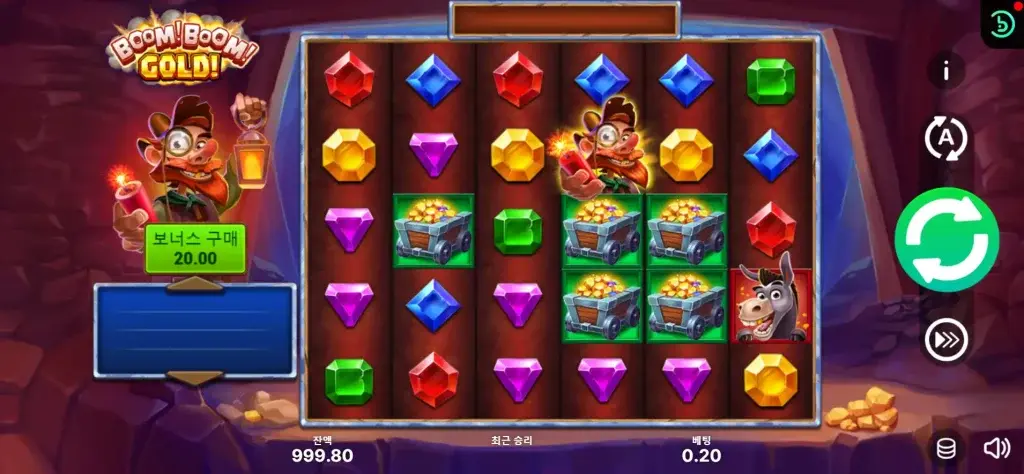
붐 붐 골드 refers to Boom! Boom! Gold!, a Booongo-branded title on the provider’s official game page, built around a 6×5 layout, cascading symbols, and cumulative multipliers, with an advertised maximum win of up to 10,000x bet.
What that means in play is simple. The pace comes from chain reactions (cascades) and the emotional swings come from whether a run of hits keeps feeding the multiplier build-up, or stops quickly and resets the screen.
Key Takeaways of 붐 붐 골드
- The official listing presents Boom! Boom! Gold! as a 6×5 slot with cascading symbols and cumulative multipliers, so spins can feel longer when the screen keeps clearing and refilling.
- The advertised “up to 10,000x bet” is a ceiling, not a typical session outcome, and it mainly signals that rare high-end results exist in the math model.
- RTP is a designed long-run figure, and regulators distinguish it from short-period results, which can swing widely because of variance and volatility.
- If you are playing in South Korea, keeping limits and support options visible matters, and the Korea Problem Gambling Agency operates the national helpline (1336).

What 붐 붐 골드 Means / How It Works
붐 붐 골드 plays like an “activity-forward” slot. When cascades connect, the spin does not feel like a single reveal, it feels like a short sequence, where the screen keeps moving until the chain breaks.
The core texture is created by three pieces working together:
- A fuller grid (6×5)
More positions on screen can make outcomes feel busier, even when value is modest, because more symbols are constantly cycling through the display. - Cascading symbols
Wins can arrive in bursts. One hit clears, new symbols drop in, and the same wager stays “alive” for longer when cascades keep landing. - Cumulative multipliers
The multiplier element is what creates the tension. A quiet sequence ends quickly, a lively sequence can stack excitement, because later cascades may matter more than the first.
In a broader library context, Booongo slots overview helps readers compare how this “chain-and-build” feel shows up across the provider’s catalogue, without treating any single session as evidence of how the math “should” behave.
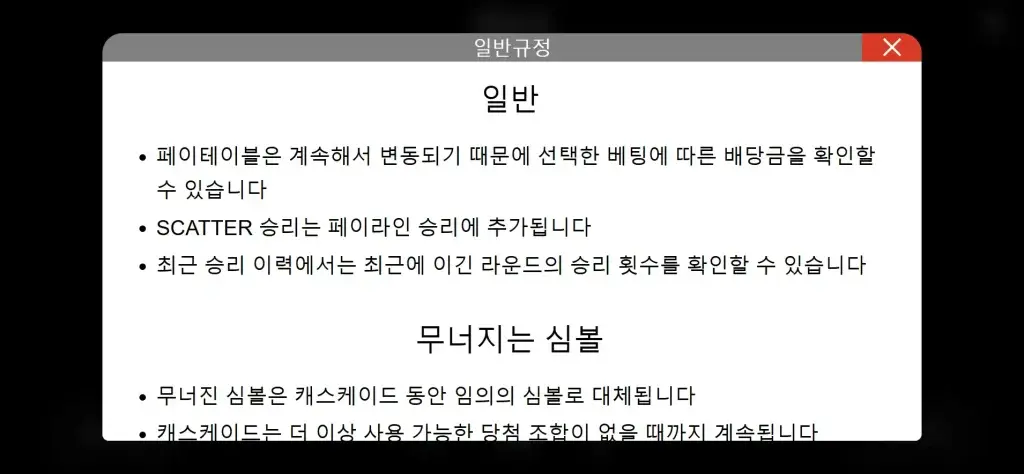
What to Check in the Game Rules Screen of 붐 붐 골드(Practical, Non-Promissory)
Before focusing on theme and animations, use the rules screen as a reality check. It is the quickest way to confirm what you are actually playing, especially if versions differ by platform.
- The exact game name and key mechanic labels
The official game page highlights cascading symbols and cumulative multipliers. Matching those labels to what you see in-game helps you avoid misunderstanding what triggers what. - RTP wording (if displayed)
Regulators define theoretical RTP as the designed return that may be shown in player-facing rules, and they separate that from actual results measured over live play. If the RTP is shown, read it as long-run design information, not as a session forecast. - Any cap or maximum win wording
“Up to 10,000x bet” is presented on the official page. In practice, it tells you the extreme upper limit exists, which often pairs with outcomes that can be uneven across short sessions. - Reel layout confirmation
If you see something other than 6×5 in a specific version, treat that as a meaningful change, because layout influences how often the screen looks active and how cascades present visually. - Volatility hints (if disclosed)
Volatility is about the pattern of returns (smaller and steadier versus larger and rarer), not about being “due.” If a volatility label is present, use it to set expectations for swinginess, not to time decisions.
These checks pair well with Booongo RTP and volatility explainer because provider pages help standardize how you interpret similar disclosures across multiple titles.
Quick Reference Table
| What to verify | What it changes in play |
|---|---|
| Cascades are actually part of the rules | Explains why spins can extend into short chains instead of ending immediately. |
| Cumulative multipliers are described | Explains why value may cluster into bursts rather than arriving evenly. |
| Theoretical RTP wording (if shown) | Keeps expectations grounded as a long-run design figure, not a session promise. |
| Max win or cap language | Frames risk as “rare extremes exist,” not “this will happen.” |
| Any volatility label or hint | Sets expectations for swinginess, without implying predictability. |
Common Mistakes / Misconceptions
- Confusing RTP with what “should” happen tonight
Regulators explicitly separate theoretical RTP from actual results. A short session can land above or below any stated RTP for long stretches. - Treating busy cascades as “better odds”
Cascades change presentation and pacing. They do not turn randomness into a controllable pattern. - Assuming multipliers mean constant momentum
Cumulative multipliers can make some sequences feel dramatic, but they can also make quiet stretches feel flatter, because so much value is concentrated into fewer, rarer moments. - Falling for “due” thinking
Volatility describes how returns tend to be distributed, not a timer that counts down to a bonus or big hit.
Examples
Think of 붐 붐 골드 as two layers happening at once:
- The screen layer: cascades and multipliers create action and rhythm.
- The math layer: theoretical RTP and volatility concepts explain why that rhythm can still produce uneven sessions.
A useful baseline for those concepts lives in [[HUB LINK: Casino Playing Basics]], especially if you want a consistent way to interpret RTP, volatility, and variance across different slot styles.
Responsible Gambling Note
If you are playing in South Korea, treat this as entertainment with real financial risk, and set limits before starting (money, time, and how you respond to losing streaks). If gambling stops feeling controllable, support is available, and the Korea Problem Gambling Agency operates the National Gambling Helpline (1336).
FAQ
Does 붐 붐 골드 have a fast gameplay pace?
It can feel fast because cascades can extend a single spin into a short chain of outcomes, rather than a single stop-and-reveal moment.
If I see an RTP figure, what should I do with it?
Use it as long-run context only. Regulators define theoretical RTP as the designed return shown in rules, and separate it from actual results observed in live play, which can vary over short periods.
What is the most important thing to confirm before trusting a review or memory?
Confirm the rules screen in your version. The official listing highlights a 6×5 layout, cascading symbols, and cumulative multipliers, and mismatches on any of these are a sign you might be looking at a different build or presentation.
Resources
- BNG, Boom! Boom! Gold!
- BNG, THIS IS US (About BNG)
- UK Gambling Commission, Key terms relating to live return to player performance monitoring of games of chance
- Korea Problem Gambling Agency, Overview
- National Gambling Control Commission (Korea), National Master Plan for Responsible Gambling