Quick Answer
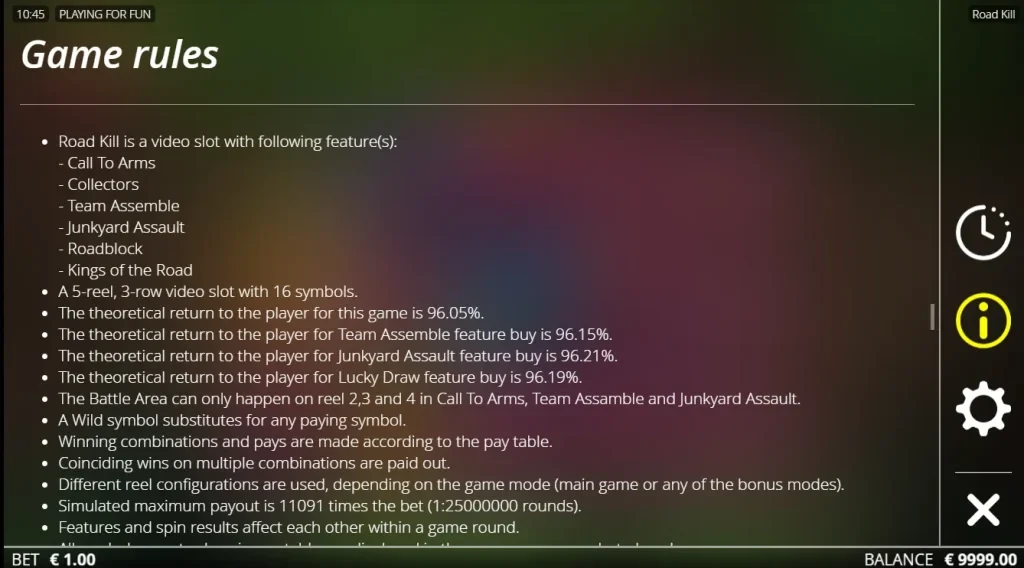
로드킬 (Roadkill) is a NoLimit City slot built around a “road encounter” layer that runs alongside the reels. In play, you are not only watching symbol hits, you are also tracking hearts and moving obstacles that can extend or cut off the action. That creates a session rhythm that can feel calm for stretches, then suddenly swing when the state shifts. The official game page lists RTP as 96.04% (RTP versions can vary by operator or jurisdiction, so the in-game rules screen is the one that matters).
Key Takeaways of 로드킬
- The heart-based progression can make bonus-like phases feel longer or shorter than you expect, because the run ends when hearts are depleted.
- Three Jump Wild characters change the board in different ways, so the “how it’s going” feeling can shift mid-session without any extra decisions from you.
- Feature buy options and certain mechanics may be restricted in regulated markets, so South Korea readers should rely on what the rules screen shows in their own environment.
- RTP is a long-run design metric, it does not describe what a short session “should” return.
What 로드킬 Means / How It Works
This game’s core feel comes from split attention. The reels still matter, but the “road” layer becomes the pacing engine, because the state of hearts and obstacles can change how tense each spin feels. A spin that looks ordinary on the reels can still be memorable if it triggers a key block or state change on the road.
A useful way to frame it is NoLimit City slot design patterns where layered mechanics often create the sensation of momentum building, then breaking, rather than a single clean bonus that starts and stops on a fixed timer.
Heart-based progression and session texture
According to the official description, the run ends when hearts are depleted. In practice, that can create two very different “moods” inside the same session:
- A sustained phase where hearts last longer and you see more of the moving-road behavior.
- A sudden stop phase where hearts drop quickly and the action cuts off before anything feels resolved.
Neither pattern predicts results, but it does explain why the game can feel volatile even when you are doing the same thing every spin.
The three Jump Wilds and how they change what you notice
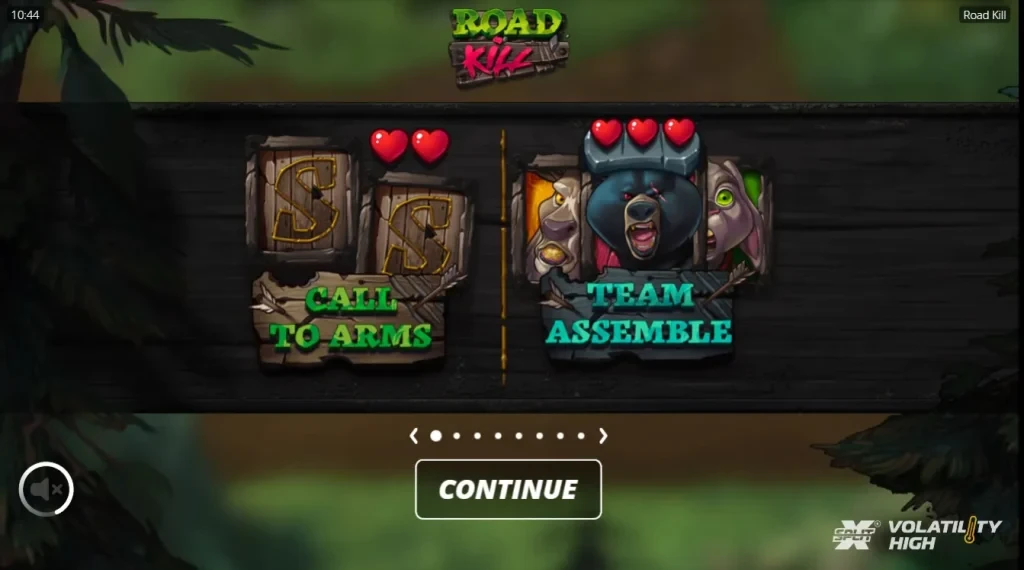
The official page describes three Jump Wild characters that interact with the road zone and blocking behavior. Each one nudges the experience in a different direction.
- Papa Bear: Blocking actions can build multipliers, which can make later moments feel “heavier” than early spins, even if hits are sparse.
- Fred the Rabbit: Leaving Wilds behind can create a lingering-board feeling where earlier events seem to matter for later spins.
- Deer Joe: Splitting symbols changes the board shape, which can make outcomes feel more chaotic, because the same base hit can branch into multiple outcomes.
That “board reshaping” feeling aligns with NoLimit City xMechanics gameplay flow where the main tension often comes from how the screen is transformed, not from adding extra player decisions.
What to Check in the Game Rules Screen (Practical, Non-Promissory)
For South Korea readers especially, the rules screen is your most reliable reference, because availability and feature sets can differ by market. These checks are quick, practical, and directly tied to how the game will feel in-session.
- RTP wording and value
- The official page lists 96.04%, but some titles are released in multiple RTP configurations. Confirm the RTP inside the game’s information or rules menu.
- RTP is calculated over very large numbers of plays, so short sessions can run far above or below it without anything being “wrong.” The UK Gambling Commission explains RTP as a calculated return concept, not a promise for any given session.
- Volatility disclosure
- Some games label volatility directly, others do not. If it is shown, treat it as a description of swing intensity, not a forecast of when a feature will occur.
- Feature buy and restricted mechanics
- The official page notes a bonus buy option, and also states that certain features may be removed in regulated markets. If feature buy is absent, the pacing can feel slower because you are fully dependent on natural triggers.
- Hearts, end conditions, and any caps
- Find the exact condition for heart loss and for run end. This is what turns the game into a “sustain the state” experience rather than “spin count” gameplay. Any caps or maximum win notes also matter for expectation-setting.
Quick Reference Table
| What to verify | Where it appears | What it changes in play |
|---|---|---|
| RTP value and wording | Rules or info screen | Long-run metric, not a session outcome |
| Heart depletion rules | Rules section for the mode | How abruptly the run can end |
| Jump Wild behavior | Feature descriptions | Whether the game feels multiplier-led, sticky, or split-driven |
| Feature buy availability | Buy menu or rules note | Entry method into high-swing phases may differ by market |
| Caps or max win notes | Rules screen | Helps you interpret rare-event framing responsibly |
(Feature labels and RTP shown above are based on the official Roadkill page, always prioritize the in-game rules in your environment.)
Common Mistakes / Misconceptions
- Treating RTP as a short-session expectation
RTP is a long-run average concept. A short sample can swing widely, especially in higher-volatility slots. - Reading hearts as a “due” signal
Hearts describe how long the state can continue, not whether the next spins are more likely to pay. - Assuming streaks mean the game will “balance out soon”
Short-term streaks are common in random processes. Planning a session around “it has to turn” tends to break bankroll discipline.
Examples (only if directly clarifying)
- How to interpret RTP without overreading it
If a game is listed at 96.04% RTP, it roughly means that over an extremely large number of spins, the expected average return is 96.04 per 100 wagered. In a real session, the path to that average can be jagged, and a heart-based structure can make those jagged swings feel even more dramatic.
Responsible Gambling Note
If the session feel starts pushing you toward chasing swings, that is usually a sign to stop. A simple control that fits volatile slots is a fixed session budget and a fixed stop time, chosen before you start, and not adjusted mid-session. For support resources, Korea Problem Gambling Agency provides help services and information (including the 1336 helpline).
FAQ
Is Roadkill a fixed free spins bonus?
The official description emphasizes ending the run when hearts are depleted, which points to a state-based structure rather than a fixed spin count. That is why the length can feel unpredictable even when the rules are consistent.
Is feature buy always available?
The official page mentions a bonus buy option, and also notes that certain features may be removed in regulated markets. The rules screen in your specific version is the definitive answer.
Why do NoLimit City games often feel so swingy?
Many titles use mechanics that reshape the screen, stack multipliers, or extend state-based phases, which changes the emotional pacing of a session. how NoLimit City presents rules and feature labels helps you read those disclosures so the volatility feels explainable rather than mysterious.
Why do NoLimit City games often feel so swingy?
Many titles use mechanics that reshape the screen, stack multipliers, or extend state-based phases, which changes the emotional pacing of a session. how NoLimit City presents rules and feature labels helps you read those disclosures so the volatility feels explainable rather than mysterious.
Resources
- Nolimit City, “Roadkill Slot”
- UK Gambling Commission, “How to calculate return to player (RTP)”
- Korea Problem Gambling Agency, “Main”
- Malta Gaming Authority, “Player Hub”
- National Gambling Control Commission (South Korea), “National Master Plan For Responsible Gambling”