Quick Answer
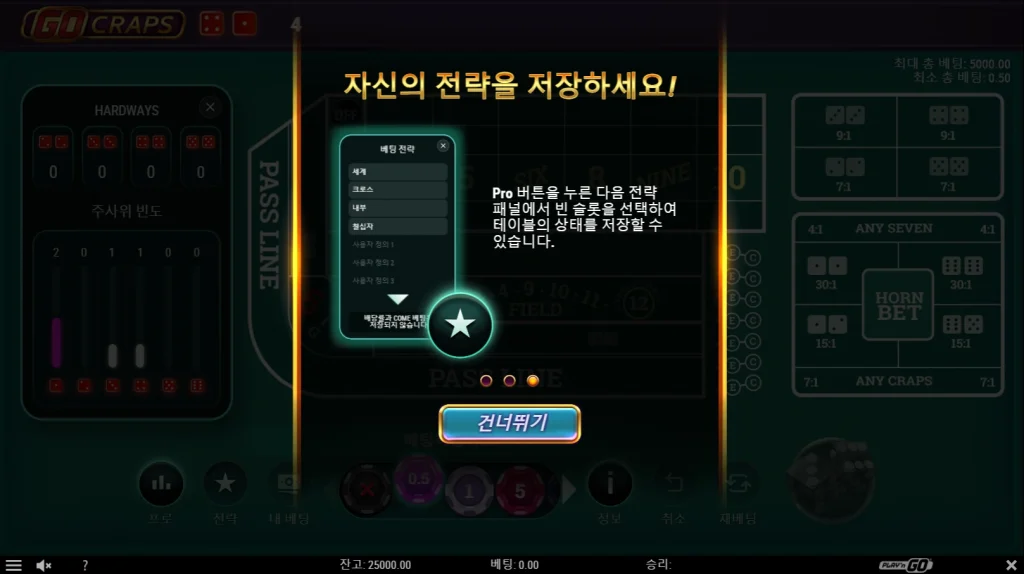
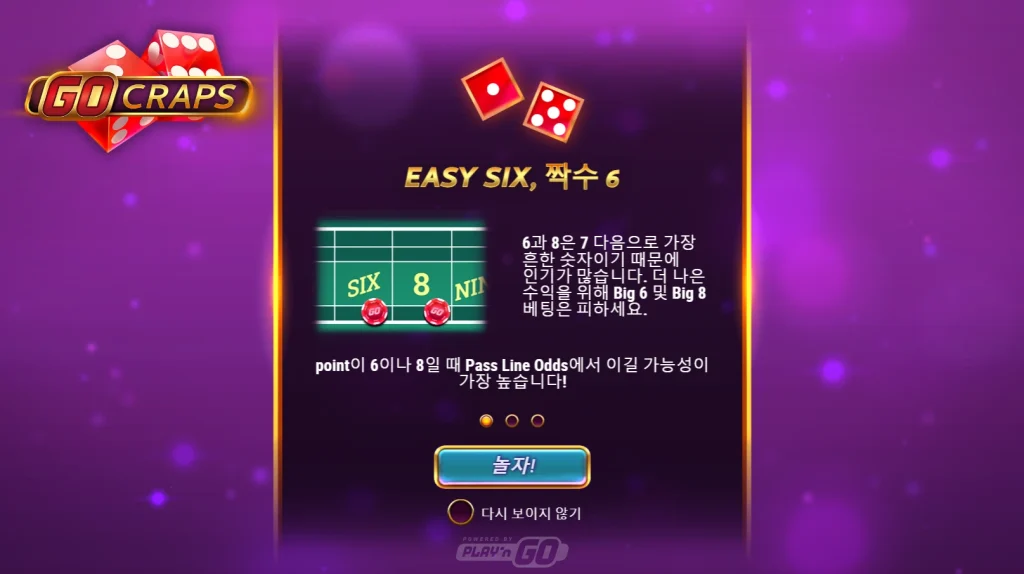
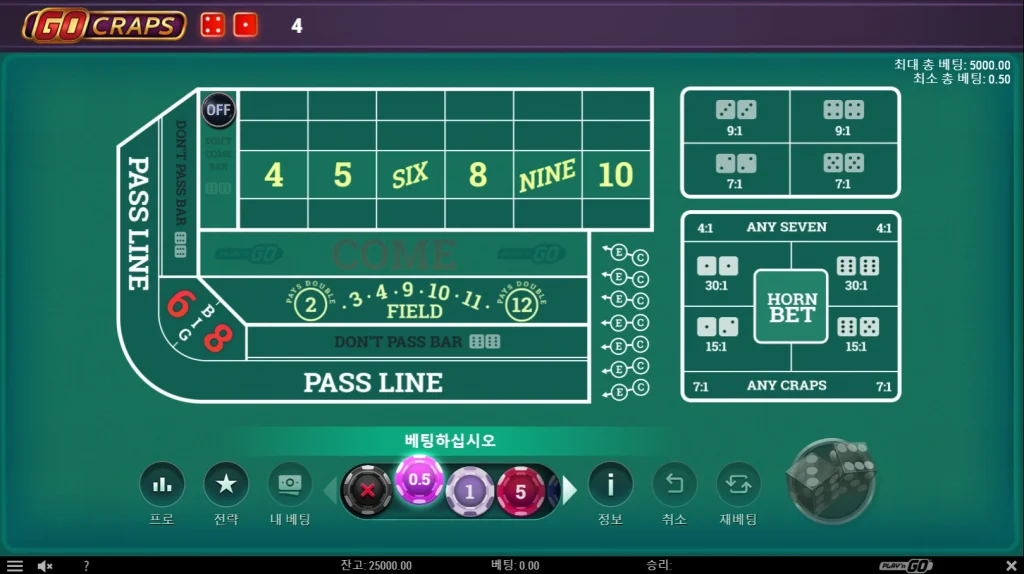
고 크랩스 is Play’n GO’s digital version of craps, built to make a traditionally busy dice table easier to read on PC, mobile, and PC online screens. Instead of feeling like a slot, it feels like a table game session built around two clear phases, the Come Out phase and the Point phase, with bet options such as Pass Line, Don’t Pass Bar, Hardways, Horn bets, and Field bets presented in a cleaner digital layout. Play’n GO describes it as an authentic but intuitive table game, with roll history tracking, strategic bet placement, and saveable strategies.
Key Takeaways
- 고 크랩스 is a table game, not a slot, so the session rhythm comes from dice phases and bet selection rather than spins and bonus rounds.
- The main gameplay feel is about switching between the Come Out roll and Point play, then deciding whether to stay simple or add side bets that change the risk profile.
- What matters most on the rules screen is not a promise of results, but whether the game clearly explains bet labels, payout terms, and any RTP disclosure shown to players.
- For South Korean readers, the practical challenge is often terminology, because English table-game labels can appear faster than the action itself on mobile screens. That makes the rules panel more important than the first roll.
- RTP and volatility help frame expectations over time, but they do not describe what will happen in one short session.
- Session limits and in-play reminders matter most when a game feels fast and repetitive, which is exactly when dice-table rhythm can become easy to chase.
What It Means and How It Works
고 크랩스 plays like a simplified digital table session where the screen does more of the organisation for you than a live or crowded physical table would. Play’n GO says the game recreates craps through two distinct phases, the Come Out phase and the Point phase, while keeping betting options broad enough for both newer and more experienced players.
In practice, that means the first thing you notice is pace. The action is not driven by reels or feature triggers. It is driven by the roll cycle, the state of the point, and how many bet types you decide to keep in play at once. A cautious session can feel methodical, with repeated focus on core line bets. A more crowded betting approach feels much busier, because each roll can touch several positions at once and turn the table display into a quick information scan. That is why many readers coming from the Play’n GO table game overview notice that this title is less about visual spectacle and more about reading the board correctly.
The other noticeable part of the flow is interface control. Play’n GO highlights roll history tracking, strategic bet placement, and saved strategies, which suggests this version is designed to reduce some of the friction that makes traditional craps feel intimidating at first glance. For South Korean users moving between desktop and mobile, that matters because the real learning curve is often not the dice itself, but how quickly you can recognise which part of the board you are looking at and what the current phase means for your active bets. That broader design approach also fits the Play’n GO game provider guide rather than a slot-style bonus loop.
What to Check in the Game Rules Screen
Before focusing on odds or systems, check whether the rules screen clearly names the bet types available in this version of the game. Play’n GO’s official description mentions Pass Line, Don’t Pass Bar, Hardways, Horn bets, and Field bets, so those are the first labels worth matching against the actual table layout. If a term appears on the felt but not clearly in the help file, gameplay usually feels slower because every roll turns into a translation exercise.
Next, look for how the game explains phase changes. A good rules screen should make the transition between Come Out and Point play easy to follow, because that shift changes how the board reads and how a new player interprets the next roll. In a fast session, confusion usually starts here, not with the dice math itself. Readers who want the wider context around interface style often end up comparing this with the Play’n GO portfolio page because Play’n GO positions GO Craps as part of its table game range rather than as a novelty feature title.
Then check whether the game shows any RTP disclosure in the player-facing rules. Regulators such as the UK Gambling Commission distinguish theoretical RTP, which is the designed and advertised RTP shown in player-facing rules, from actual RTP measured over live operation. That distinction matters because a displayed percentage is a long-run design figure, not a forecast for one evening on a phone screen.
Also check whether the rules explain payout terms, bet limits, and any caps that affect how the table behaves in real use. This matters more than people expect. A craps layout can look open and flexible, but the meaningful experience is shaped by what the game lets you stack, repeat, or combine from one roll to the next. That is also where Casino Playing Basics becomes useful, because the core skill is learning how disclosure language changes what a session actually feels like.
Quick Reference Table
| What to check | Why it matters in play |
|---|---|
| Bet names match the board | Reduces hesitation before each roll and makes the layout easier to follow |
| Come Out and Point explained clearly | Helps you understand why the same number can matter differently across phases |
| Payout terms for each bet | Shows which areas of the board carry different reward and risk profiles |
| RTP wording, if shown | Keeps expectations realistic, because RTP is theoretical over time, not session-by-session |
| Limits, caps, or stake rules | Affects whether the session feels flexible, constrained, or easy to overextend |
| Roll history and saved strategy tools | Useful for tracking rhythm, but not evidence that a pattern is due next |
Common Mistakes and Misconceptions
One common mistake is treating craps like a slot just because it is on a digital screen. 고 크랩스 does not revolve around bonus rounds or feature cadence. It revolves around table state, bet choice, and the emotional swing of watching the same board change meaning from one phase to another.
Another mistake is assuming RTP tells you what a short session should return. The UK Gambling Commission notes that theoretical RTP is the designed percentage shown in rules, while actual RTP reflects live operational performance over measured play. That means a brief session can still feel far above or below the long-run figure without contradicting the design.
A third mistake is reading volatility as a promise of timing. Volatility describes the pattern of prize distribution, often framed as small and frequent versus larger and rarer outcomes, but it does not tell you when any result will happen. In a craps context, this misunderstanding often shows up when players think a few quiet rolls mean a bigger outcome is now due. That is still gambler’s fallacy, even if the table history looks persuasive.
Finally, some players overvalue roll history. Roll tracking can help you stay oriented and review what happened, but it does not change the next roll. That is an important point for anyone reading the Play’n GO casino games overview through a strategy lens, because interface convenience should not be confused with predictive power.
Examples
A simple way to think about session feel is this. If you stick mostly to the main line structure, the game can feel comparatively readable, because each roll mainly confirms, resets, or advances the core table state. If you layer in more side bets, the same roll can touch more outcomes at once, which makes the table feel more volatile and mentally busier, even before you start discussing exact house edges.
Another example is mobile play. On a smaller screen, the challenge is often recognition speed rather than rule complexity. A player who knows the game in theory may still slow down in practice if the payout labels, phase markers, or active bet areas are not immediately clear.
Responsible Gambling Note
Because craps can produce fast repeat decision-making, it helps to set a session time and spend limit before starting, especially on mobile where round transitions feel seamless. Play’n GO says its games can support gameplay limits and in-play timers when those tools are enabled by the operator, and broader responsible gambling standards also emphasise informed decision-making and player assistance. For South Korean readers who need support, the Korea Problem Gambling Agency publicly lists counselling access and the 1336 helpline.
FAQ
Is 고 크랩스 more like a slot or a classic table game?
It is much closer to a classic table game. The session is structured around craps phases and bet selection, not reel animations or bonus triggers, even though the interface is streamlined for digital play.
What should beginners look at first in 고 크랩스?
The best starting point is the rules screen, especially the labels for Pass Line, Don’t Pass Bar, Field, Horn, and Hardways, plus any explanation of Come Out and Point phases. That gives you a working map of what the board is asking you to track on each roll.
Does roll history help predict what happens next?
No. Roll history is useful for reviewing previous outcomes and staying oriented during play, but it does not make future rolls predictable. It is a tracking tool, not a reliable system.