Quick Answer
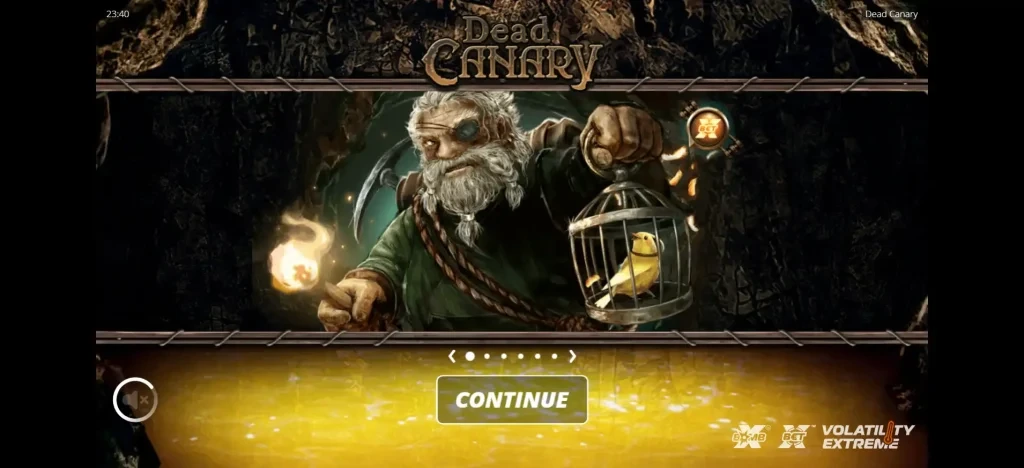
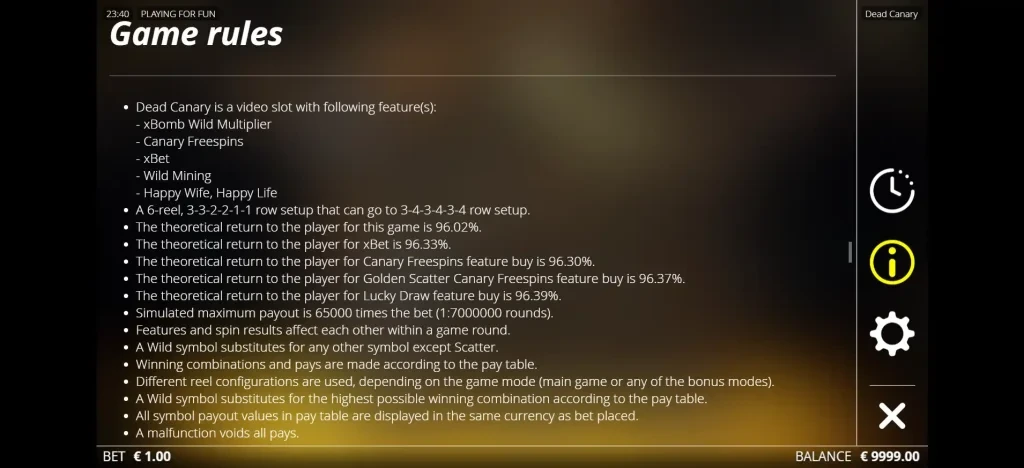
데드 카나리아 (Dead Canary) is a high volatility NoLimit City slot built around a sliding, expanding grid with cascades, xBomb explosions that raise the next cascade multiplier, and Free Spins where “collected” values can feel delayed until the feature settles. Official info for the game lists RTP 96.02%, hit frequency 26.2%, Free Spins frequency 1 in 197, and a max win of 65,000x.
Key Takeaways for 데드 카나리아
- The base game often feels busy because cascades keep the screen moving, but big jumps can be rare because volatility is high.
- xBombs are the tempo switch, they explode in a cross pattern and increase the next cascade multiplier, so momentum can build without guaranteeing a big payout.
- Free Spins add an “accumulate now, settle later” feeling, because some values are collected during the bonus and resolved when the feature ends.
- RTP is a long-run average across many plays, not a promise for a single session, especially in high volatility slots.
- If you are playing from South Korea, it helps to keep your session boundaries clear and know where support exists, like the national 1336 helpline.
What 데드 카나리아 Means / How It Works
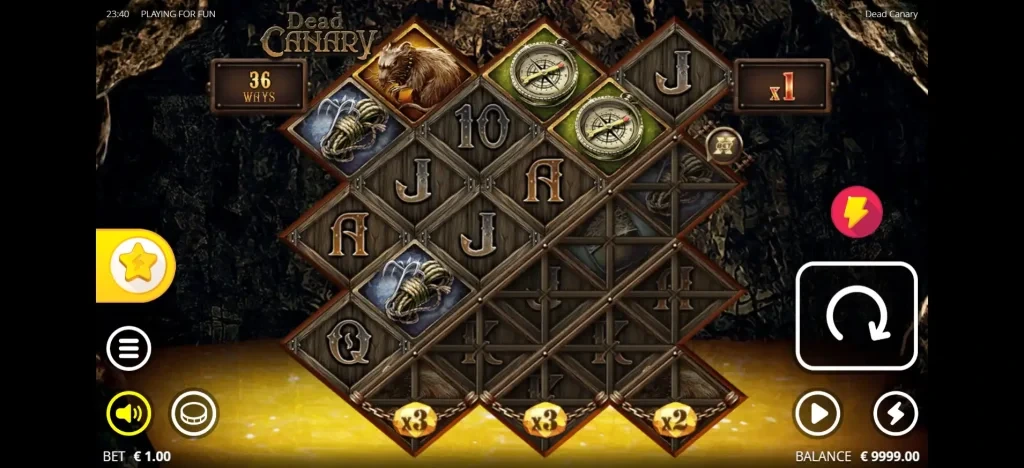
데드 카나리아 core feel is “cascades on a crooked mine shaft.” A spin rarely looks static for long, because wins clear symbols and new ones slide in, creating additional cascades in the same spin.
The signature rhythm comes from xBombs. When an xBomb explodes, it clears a cross-shaped area and increases the next cascade multiplier by 1. In practice, that means the game can feel like it is “charging up” across a chain of cascades, even when the actual money result stays modest.
Another key texture is how the grid opens. Some parts of the playfield are blocked early, and the game can reveal or unlock more space as features trigger, which changes what you see and how quickly the board can swing. This “board evolution” style is common enough that NoLimit City slot design overview can help you compare it to other titles by the same studio.
Free Spins shift the pacing again. You still see cascades and multipliers, but the bonus introduces collection and locking behavior that can make the bonus feel tense, because numbers may build on-screen while the actual settlement is deferred until the feature resolves.
What to Check in the Game Rules Screen (Practical, Non-Promissory)
Before you focus on any feature labels, check the “truth-in-play” items that shape expectations.
- RTP wording and where it appears
RTP is an average over a significant number of game plays, not “what you should get back” today. If the rules screen, paytable, or info panel frames RTP as a long-run concept, that is the correct mental model to keep. - Volatility label and any “extreme” wording
If the game flags high or extreme volatility, treat that as a warning about session shape, more dead air, sharper spikes, and outcomes that can diverge wildly from the long-run average in short samples. - Hit frequency and Free Spins frequency
Dead Canary’s published hit frequency (26.2%) and Free Spins frequency (1 in 197) are useful for expectation-setting. A “hit” can be small, and a bonus can still feel rare, even when the screen is constantly animating. - xBomb behavior and multiplier rules
Look for the exact text on how xBombs explode and how multipliers step. This is what determines whether a chain feels like it is escalating or stalling, even when your stake size does not change. - Any paid modifiers (xBet, etc.)
If an option changes scatter behavior, unlocks, or bonus access, read it as a change to feature cadence and risk profile, not as a “better odds” switch. This is also a good moment to ground yourself in How NoLimit City presents RTP and volatility so you can spot similar modifiers in other games.
Quick reference table
| What to verify | What you are looking for | What it changes in play |
|---|---|---|
| RTP | Long-run average language | Stops you from treating one session as “due” |
| Volatility | High or extreme label | Predicts sharper swings, longer dry spells |
| Hit and bonus frequency | 26.2%, 1 in 197 | Explains why action can feel frequent but big events are not |
| xBomb rules | Explosion pattern, multiplier step | Controls whether cascades feel like they are building |
| Feature settlement | Any “collect then pay” wording | Creates delayed certainty inside Free Spins |
Common Mistakes / Misconceptions
- “RTP means I should get that back.” RTP is not a personal guarantee. It is an average achieved over many plays across a large sample.
- “After a long cold streak, a hit is more likely.” Independent spins do not become favorable because you have been losing, that is a classic gambler’s fallacy.
- “Busy animations mean I am close to a big payout.” Cascades and explosions increase visual activity, not certainty. In Dead Canary, xBombs can build multipliers without producing a large cash result.
- “Bonus meters are already mine.” If the feature design collects values that settle later, treat on-screen accumulation as provisional until the bonus ends.
Examples (clarifying only, non-promissory)
- RTP versus session outcomes: A game can be designed with 96.02% RTP and still produce a losing session or a sharp upswing, because short-run results vary heavily around long-run averages.
- High volatility feel: You might see many small cascade hits, then long stretches of low impact, and only rarely a sequence where multipliers stack in a way that meaningfully changes the total. That “rare but sharp” pattern is consistent with the game being labeled high volatility.
Responsible Gambling Note
High volatility slots can pull you into longer sessions because the pace feels fast and “almost-there” moments are common. In South Korea, it is especially important to decide your time and money limits before you start, and to treat any feature chase as entertainment spending rather than a plan. If gambling is starting to feel hard to stop, Korea Problem Gambling Agency describes support services and the national helpline 1336.
For broader context, South Korea’s National Gambling Control Commission describes multi-year planning aimed at reducing gambling-related harm and promoting a responsible culture.
Foundational concepts like variance, RTP, and session limits are also covered in [[HUB LINK: Casino Playing Basics]].
FAQ
Is 데드 카나리아 a “strategy” game?
Not really. Like most slots, your meaningful choices are limited. The practical skill is reading the rules, understanding volatility, and keeping your bankroll behavior consistent with the risk profile.
What should I check first if the slot feels “unfair” in a short session?
Start with the rules screen: RTP and volatility language, plus any feature settlement rules. RTP is a long-run average, and short sessions can deviate significantly, especially in high volatility designs.
Why do NoLimit City slots often feel different from classic slots?
They frequently use mechanics that change the board state and pacing during a spin, cascades, expanding layouts, multipliers that step, and feature flows where value can collect before it settles. If you want the “how to read it” framework, NoLimit City rules and feature labels explained is the cleanest reference point.
Resources
- Nolimit City, Dead Canary (official game page)
- UK Gambling Commission, Return to player: how much gaming machines payout
- UK Gambling Commission, How to calculate return to player (RTP)
- Korea Problem Gambling Agency, Overview (incl. National Gambling Helpline 1336)
- National Gambling Control Commission (Korea), National Master Plan For Responsible Gambling