Quick Answer
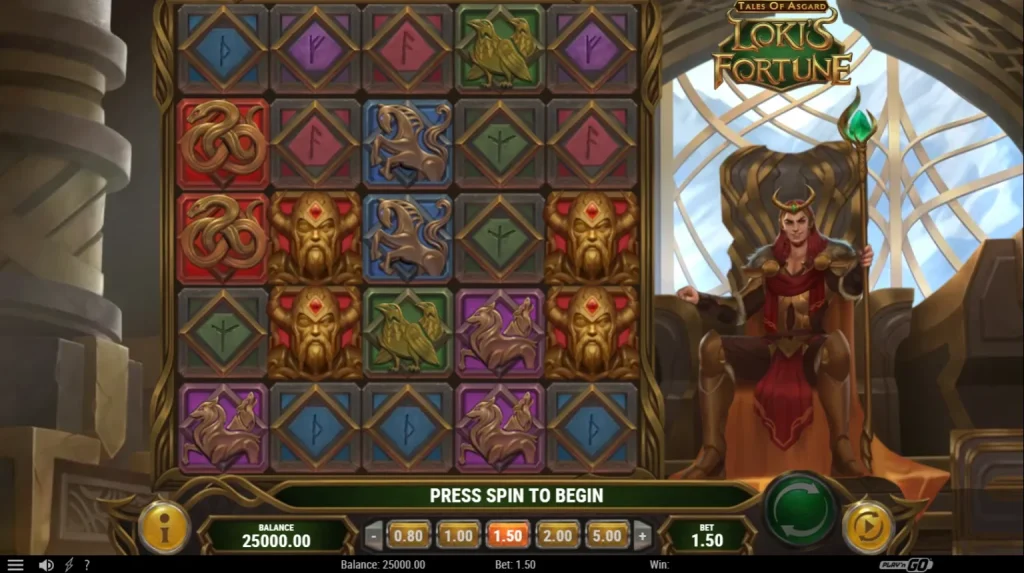
로키스 포춘, officially titled Tales of Asgard: Loki’s Fortune, is a Play’n GO video slot built around a 5×5 grid and Dynamic Payways. Play’n GO states that the game begins with 3,125 ways to win, with its splitting-symbol mechanics capable of expanding the layout to as many as 100,000 ways.
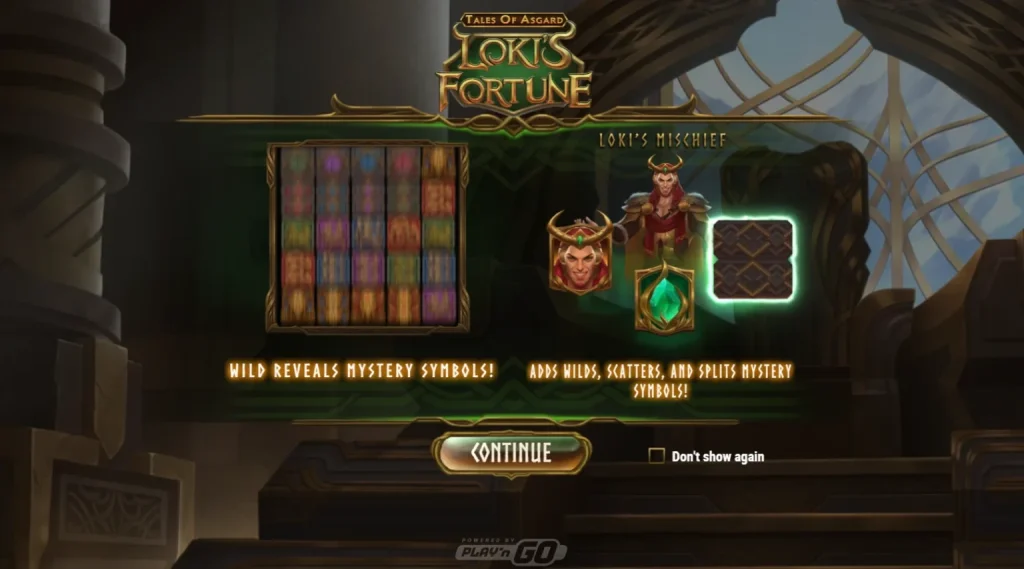
The gameplay revolves around Loki Wilds, Mystery Symbols, random Loki’s Mischief modifiers, and a free spins feature. Instead of producing a steady, repetitive rhythm, the game frequently builds tension around inactive Mystery Symbols that can change the grid significantly when the right accompanying symbols appear.
For readers in South Korea, this page describes the game strictly from an educational gameplay perspective. It should not be interpreted as confirmation that real-money access is lawful or available locally. South Korea’s Criminal Act contains specific restrictions concerning gambling, so applicable laws and permitted activities should be checked independently.
Key Takeaways
- The game uses a 5×5 layout with 3,125 starting win ways and Dynamic Payways that can expand substantially through split symbols.
- Loki acts as a Wild and is closely connected to the Mystery Symbol mechanic.
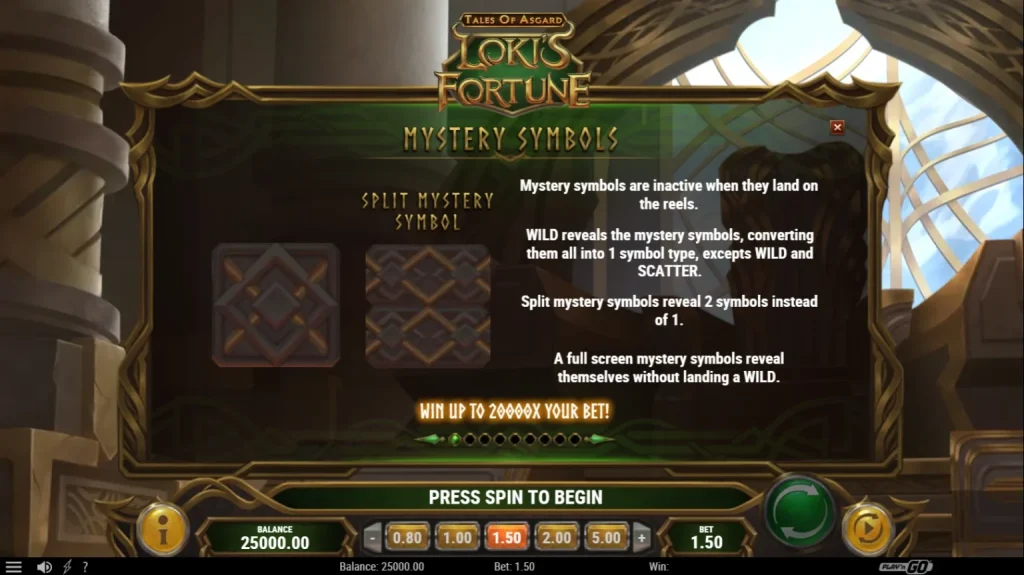
- Mystery Symbols initially occupy grid positions without functioning like normal paying symbols, then become more meaningful when revealed.
- Loki’s Mischief can alter a spin by adding Wilds, Scatters, or upgrading qualifying Mystery Symbols.
- The free spins round increases the emphasis on the game’s Wild and Mystery Symbol interactions.
- Published game-review information generally describes the slot as high volatility, so short sessions can differ substantially from its theoretical long-term RTP.
What It Means and How It Works
The central gameplay idea is transformation rather than simple reel matching.
At the start of an ordinary spin, the 5×5 grid can contain normal symbols, Loki Wilds, Scatters, and Mystery Symbols. The basic Dynamic Payways structure begins at 3,125 possible ways. Split Mystery Symbols can add extra symbol positions, which is how the game can expand toward 100,000 ways rather than remaining fixed at its starting configuration.
That creates a distinctive session rhythm. A grid containing several Mystery Symbols may initially look incomplete because those positions are effectively waiting for interaction. When a Loki Wild participates in their reveal, the Mystery Symbols can turn into matching symbols. Some can also split, creating additional symbol instances and more possible combinations.
This mechanic is one of the clearest examples of the feature-driven design found across Play’n GO games, where understanding what a special symbol does is often more useful than memorizing every individual paytable value.
Loki’s Mischief introduces another layer of uncertainty. Published game information describes three possible interventions: additional Wilds, additional Scatters, or an upgrade that converts qualifying Mystery Symbols into split versions.
Because these effects can change the grid during a spin, gameplay can shift quickly from an ordinary 5×5 arrangement into a much denser screen. That does not make any individual outcome predictable. It simply changes how many symbol positions and feature interactions are available during that round.
The free spins feature continues the same core idea instead of replacing it with an unrelated bonus game. Third-party rule summaries report 8, 12, or 20 free spins for three, four, or five triggering Scatters respectively, with Wild and Mystery Symbol activity becoming more prominent during the feature.
That continuity makes the bonus easy to understand once the base game is familiar. The main difference is feature intensity, not a completely different set of rules.
What to Check in the Game Rules Screen
Before interpreting any session, several pieces of information deserve attention.
Check the RTP shown in the specific version. Review sources commonly list 96.20% as the default RTP, but they also report that alternative configurations can exist. The figure displayed in the actual rules interface is therefore more relevant than assuming every implementation uses the same percentage.
RTP is a long-run theoretical percentage. It does not mean a player should expect approximately 96.20% back during one evening, one hundred spins, or any other short sample.
Understanding how Play’n GO RTP disclosures are presented is especially important because theoretical return and short-session results answer different questions.
Check the starting and maximum win ways. Play’n GO officially describes the game as starting with 3,125 Dynamic Payways and potentially reaching 100,000.
This matters because the visual grid can expand during feature interactions. More ways on a particular spin should not be interpreted as a promise that the spin will produce a profit.
Check how Mystery Symbols activate. The defining mechanic depends on the relationship between Mystery Symbols, Loki Wilds, and split symbols. If the exact implementation shown in the rules differs from a review or older description, the current in-game rules should take precedence.
Check the Wild rules. Loki functions as the game’s Wild, but players should still verify substitution exceptions and any conditions attached to Mystery Symbol reveals. Play’n GO’s official material specifically identifies Loki as the Wild character.
Check the free spins conditions. Confirm the number of Scatters needed, the number of spins awarded, whether retriggers are possible, and whether symbol frequencies or feature behavior change.
Check any maximum payout disclosure. Review sources list a maximum potential payout of 20,000 times the stake. This is a game limit, not an expected outcome or realistic session target.
The broader Play’n GO game rules and features page can help place these disclosures in context when comparing terminology across titles from the same developer.
Quick Reference
| Gameplay element | What to watch for | Why it changes the feel |
|---|---|---|
| 5×5 grid | Five reels and five starting positions per reel | Creates a dense screen with many simultaneous symbols |
| Dynamic Payways | Starts at 3,125 ways | Split symbols can increase the number of available combinations |
| Mystery Symbols | Inactive-looking positions awaiting a reveal | Creates spins where the important event occurs after the initial symbols land |
| Loki Wild | Wild substitution and Mystery interaction | Can turn an otherwise uneventful-looking grid into a feature-driven result |
| Loki’s Mischief | Random Wild, Scatter, or Mystery-related intervention | Adds sudden changes to base-game and bonus flow |
| Free spins | Greater emphasis on Wild and Mystery interactions | Concentrates the game’s core mechanic into a bonus sequence |
| High volatility | Larger variation between results | Makes short sessions less representative of theoretical RTP |
The official Play’n GO material confirms the game’s 5×5 structure, Dynamic Payways terminology, Loki Wild, and Mystery Symbol theme. Volatility classifications and certain numerical details come from published game-review sources rather than the provider’s public product page.
Common Mistakes and Misconceptions
Treating RTP as a session prediction
An RTP figure such as 96.20% describes theoretical performance over a very large number of game rounds under a particular configuration. It cannot predict what will happen over 20, 100, or 1,000 spins.
A high-volatility slot can produce results that sit far away from its theoretical average over comparatively short periods.
Assuming more payways means a win is due
Expanding from 3,125 toward 100,000 ways changes the number of potential symbol combinations available on that spin. It does not create a guarantee that one of those combinations will return more than the stake.
The paytable, symbols present, and resulting combinations still determine the outcome.
Reading Mystery Symbols as guaranteed value
Mystery Symbols are part of the feature architecture, not an automatic payout. Their importance depends on how the reveal mechanic interacts with the rest of the grid.
Their presence can make a spin visually promising, but appearance alone does not establish its final value.
Thinking a losing streak improves the next spin
Previous losses do not make a future winning result “due.” Likewise, several successful feature activations do not prove that another one is more or less likely unless the game’s documented mechanics explicitly create such a dependency.
This is the gambler’s fallacy, and it is particularly easy to apply incorrectly to games with visible random modifiers.
Treating Loki’s Mischief as a strategy signal
The modifier can affect the structure of an individual spin, but there is no player-controlled system for reliably predicting when a specific Loki’s Mischief effect will appear.
The mechanics documented across Play’n GO slot gameplay are better understood as game rules and probability-driven features rather than strategic signals.
Example of the Variance Effect
Consider two hypothetical sessions using the same game configuration.
One session might contain several Mystery Symbol reveals and a bonus round within a relatively short sequence. Another could contain long stretches where those interactions produce little or no significant return.
Those different experiences do not establish that one session was using a “better pattern.” They illustrate variance, meaning actual short-term results can move considerably around the game’s theoretical long-term return.
High volatility can make that contrast more noticeable. Players may experience longer quiet sequences followed by occasional larger movements in the balance, although neither the timing nor size of those movements can be reliably predicted.
Responsible Gambling Note
High-volatility slots can produce substantial balance swings over short periods. RTP, volatility ratings, maximum payouts, and feature probabilities should be treated as descriptive game information, not as tools for predicting profit.
Anyone who chooses to participate in permitted gambling should set a fixed spending limit and session limit beforehand, avoid increasing stakes to recover previous losses, and stop when the predetermined limit is reached.
For South Korean readers in particular, gameplay information should not be confused with legal availability. The Korean Criminal Act regulates gambling, and local legal requirements take precedence over whether a game can technically be accessed on PC or mobile devices.
FAQ
What type of game is 로키스 포춘?
로키스 포춘 is a Play’n GO video slot using a 5×5 grid. Play’n GO describes it as part of its Norse mythology series and uses the term Dynamic Payways for its expandable ways-to-win mechanic.
How many ways to win does 로키스 포춘 have?
The game starts with 3,125 ways. Play’n GO states that Dynamic Payways can increase this figure to as many as 100,000 when the relevant splitting mechanic changes the grid.
The important gameplay distinction is that 100,000 ways is a feature-dependent maximum configuration, not the permanent layout on every spin.
Is 로키스 포춘 a high-volatility slot?
Published reviews classify it as high volatility, with some sources describing it as 8 out of 10 on a volatility scale.
In practical terms, high volatility indicates greater variation in short-term results. It does not predict when a payout or bonus will occur.
Resources
- Play’n GO, Tales of Asgard: Loki’s Fortune
- Play’n GO News, Loki has his eye on Asgard’s throne
- Danish Spil Help, Tales of Asgard: Loki’s Fortune game rules
- Korean Law Information Center, Criminal Act, Article 246, Gambling and Habitual Gambling
- AboutSlots, Tales of Asgard: Loki’s Fortune Slot Review