Quick Answer
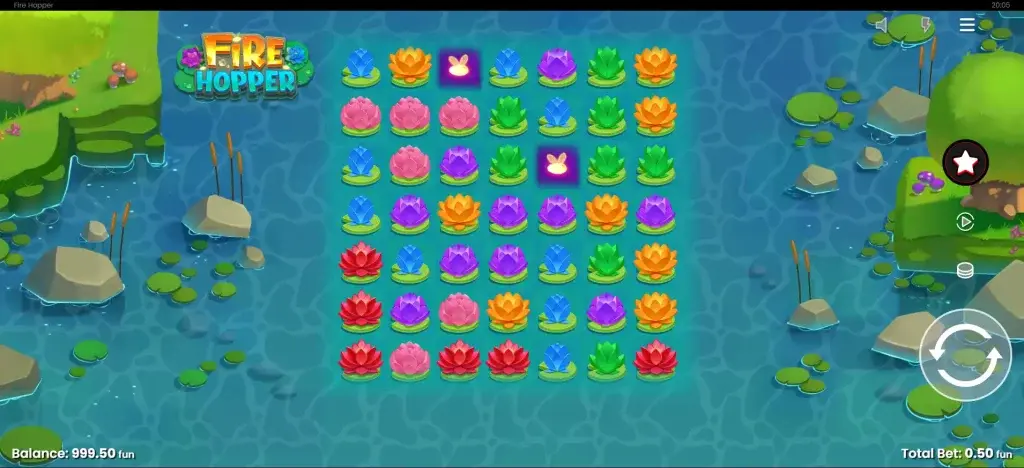
파이어 호퍼 is a 7×7 cluster-pays slot where the session rhythm is built around cascades, sudden “frog jump” moments, and a multiplier that climbs as the frog keeps moving. It is labeled High volatility, so the gameplay can feel quiet for stretches, then turn hectic when jump conditions line up and multiple elements chain together.
Key Takeaways of 파이어 호퍼
- The game lists two RTP configurations, and the RTP in use is shown on the loading screen and in the user panel.
- Volatility is labeled High, which usually means bigger swings and less predictable pacing from spin to spin.
- Bonus Buy is listed as available, but it does not change the fact that outcomes are random and session results can vary widely.
- The best “truth source” for what you are playing is always the in-game rules screen and info panels, not memory or assumptions.

What 파이어 호퍼 Means / How It Works
In feel, 파이어 호퍼 plays like a grid that can suddenly “wake up.” Many spins resolve quickly, then a single trigger changes the tempo, cascades extend the spin, and the board becomes busy with repeated evaluations of what connects, what drops, and what re-forms. That is why the same bet size can feel calm for a while, then emotionally sharp when a chain starts.
The signature motion is the frog mechanic: the frog “jumps” toward specific targets (as defined in the rules), leaving a wild behind on the landing space, and the frog’s multiplier increases as the jumping continues. In practical terms, later jumps in a chain can feel heavier than the first, because the multiplier is higher when the board is already in motion. If you want a consistent way to compare how these mechanics are presented across the studio’s titles, Push Gaming is the cleanest reference point.
What to Check in the Game Rules Screen of 파이어 호퍼(Practical, Non-Promissory)
This is the part that matters most for South Korea context reading: confirm what the game is disclosing where you are playing, then map that disclosure to what you are feeling during play.
- RTP version and where it is displayed
The official game page states RTP can vary by casino and says the RTP can be found in the user panel and on the game loading screen, with two RTP options listed. Verify which number your instance shows before you interpret anything about “return.” - Theoretical RTP vs real session results
UK Gambling Commission guidance distinguishes theoretical RTP (the designed percentage) from actual RTP (observed performance over live play), and emphasizes monitoring over time because short runs can deviate. In player terms, RTP helps frame long-run expectation, but it does not describe what your next session “should” do. - Volatility label and what it changes in your expectations
High volatility is a hint about the swing profile, not a promise of big hits. It can show up as long low-activity stretches, then a short window where the grid feels explosive. Use the label to set your expectations for pace and emotional whiplash, not to predict timing. - Core feature labels (the names you will see while playing)
The rules screen is where you confirm the exact feature wording used in the UI, how the frog jump is triggered, and how multipliers apply. This prevents common misreads like assuming every jump means “something big” is guaranteed, when it may simply be a rules-defined interaction that can still resolve modestly. Push Gaming can help you recognize recurring wording patterns across their games. - Bonus Buy availability and scope
Bonus Buy being available means a buy option exists in that version, not that it improves outcomes. If the feature is present where you play, the rules screen should clarify what is being purchased and what the parameters are. Keep it purely informational, not outcome-focused.

Mini-checklist
- Confirm which RTP value is active on your loading screen or user panel.
- Read the volatility label as a swing warning, not a timing guide.
- Identify the exact on-screen names for the frog jump and multiplier behavior in the rules.
- Treat any “long quiet stretch” as normal variance, not a signal that a hit is “due.”
Common Mistakes / Misconceptions
- Confusing RTP with what you “should get back” this session
RTP is a designed long-run concept, and real outcomes in short sessions can vary widely because of variance. A session can feel “cold” or “hot” without either state being meaningful evidence of what comes next. - Reading High volatility as a promise of big payouts
Volatility labels are about risk texture, not guarantees. High volatility often means the game’s “story” is told in spikes, not steady drip returns, which can make bankroll swings feel sharper. - Treating feature animations as signals
In games like this, the frog jump animation can be dramatic while still resolving into a small outcome. What matters is the rules-defined application of wilds and multipliers, not the intensity of the visual moment.
Examples (only if directly clarifying)
Imagine two players see the same RTP number on the loading screen. One has a short session with few feature chains, the other hits a rare-feeling chain early. Both sessions can be consistent with the same theoretical RTP because short samples swing. That is why regulators discuss actual RTP monitoring over time, not as a shortcut for predicting player outcomes. Push Gaming can be useful when you want to compare how different titles express risk and disclosure, without turning it into a prediction exercise.
Responsible Gambling Note
Slots are random, and High volatility can intensify the urge to extend a session after losses or after a near-miss feeling. Setting a money limit and a time limit before you start helps keep the session contained, and avoiding “chasing losses” is a key safety principle. For support in South Korea, Korea Problem Gambling Agency provides counseling and operates the national helpline 1336.
FAQ
Where do I verify the RTP for 파이어 호퍼?
Push Gaming states RTP may vary by casino and that the RTP can be found in the user panel and on the game loading screen. Always use those in-game displays for the version you are actually playing.
What should “High volatility” feel like in real play?
Often it feels like uneven pacing, longer quiet stretches, and occasional bursts where cascades and features stack quickly. The label helps set expectations for swings, not predict when a burst happens.
Does Bonus Buy make the game more favorable?
Bonus Buy only indicates an option exists in that game version. It does not override randomness or guarantee a better outcome. Treat it as a rules feature to understand, not a shortcut to results.
Resources
- Push Gaming, “Fire Hopper”
- UK Gambling Commission, “Key terms relating to live return to player performance monitoring of games of chance”
- UK Gambling Commission, “Live return to player performance monitoring of games of chance”
- GambleAware, “Advice to consider if you’re gambling”
- Korea Problem Gambling Agency (KCGP), “Overview”