Quick Answer
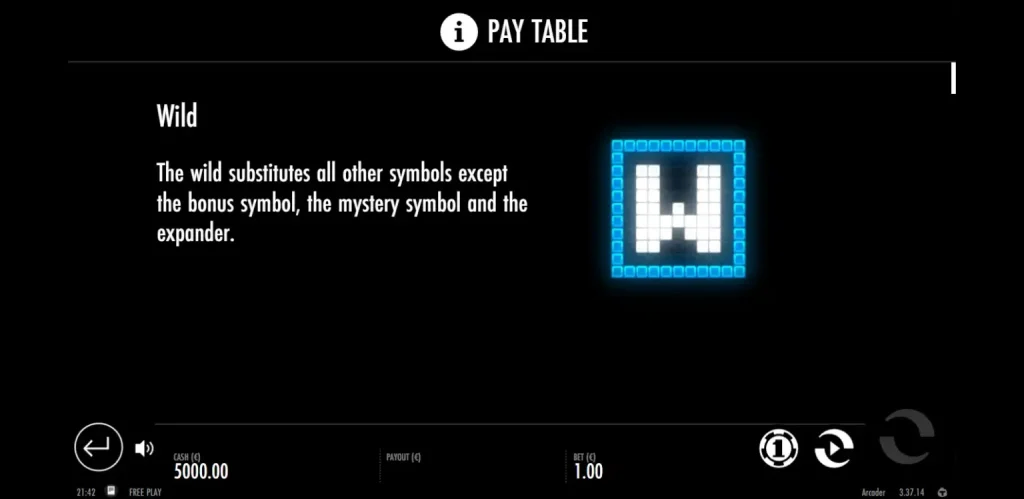
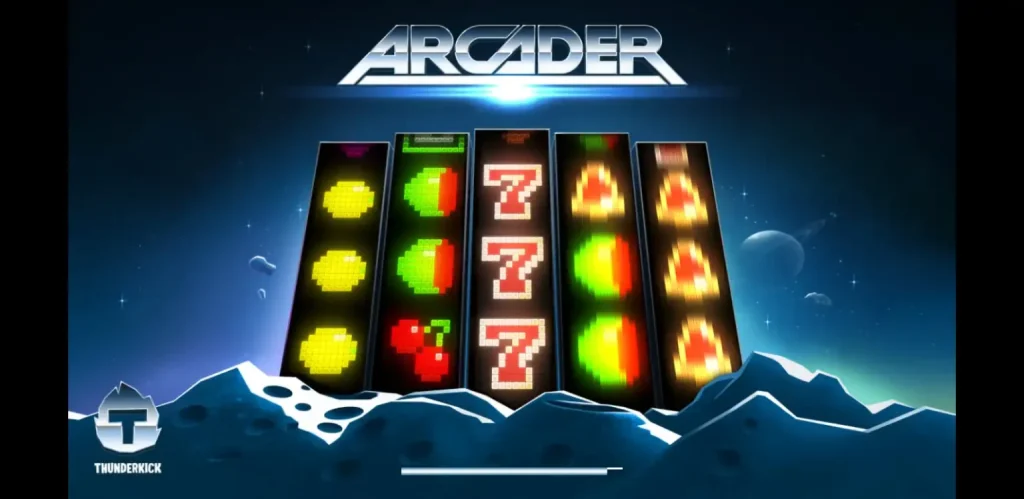
아케이더 refers to Thunderkick’s Arcader, a 5-reel, 15-payline slot with an official RTP of 96.1%, Low volatility, and Max exposure 1600. On paper and in session feel, that points to a steadier, easier-to-read slot than a high-volatility feature-heavy title. The main practical task for South Korea readers is to confirm the player-facing rules in their version, then read the RTP and volatility together instead of treating either one as a promise about a short session.
Key Takeaways
- Thunderkick’s official Arcader page lists RTP 96.1%, 5 reels, 15 pay lines, Low volatility, and Max exposure 1600.
- The game appears more readable than many feature-stacked slots because the official page presents a compact set of disclosures rather than a long chain of mechanics. This is an inference from the official game page.
- The UK Gambling Commission says theoretical RTP is the designed return displayed in the player-facing rules, while actual RTP is based on the generated win and turnover figures of the live game.
- The Commission also says volatility informs how far actual RTP may move above or below theoretical RTP over measured play, which is why volatility is useful for understanding session texture.
- Korea Problem Gambling Agency says it provides information, support, counselling, regional centers, and the nationwide 1336 gambling helpline.
What It Means / How It Works
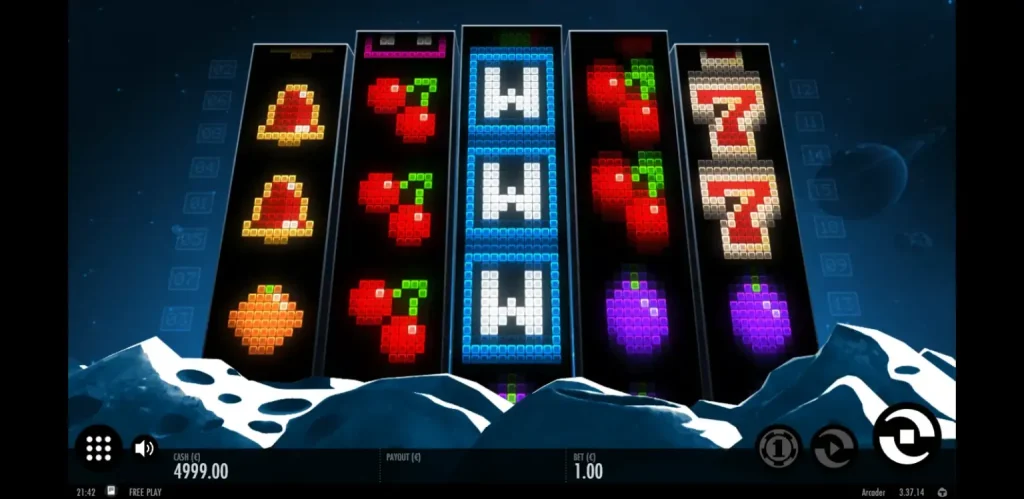
Arcader looks straightforward from the start because Thunderkick presents it with a familiar 5-reel structure and 15 paylines. That alone usually gives the game a more stable, easy-to-scan feel than wider ways-based layouts or titles built around several overlapping states. Even before looking at the volatility label, the game reads like something the player can follow without constantly checking the rules screen.
The more important clue is the official Low volatility label. That suggests a calmer result pattern than a high-volatility slot, even though short-run outcomes can still vary. In broader Thunderkick slot gameplay patterns, Arcader fits the side of the provider catalogue where the board stays readable and the tension comes less from dramatic spikes and more from steadier pacing. That characterization is an inference based on Thunderkick’s listed volatility and game structure.
The official Max exposure 1600 also helps frame the session feel. It points away from the kind of slot built around extremely rare top-end bursts. Inside how Thunderkick games explain their feature flow, Arcader looks more like a restrained, stable-format game than a feature ladder with big escalation points. That is an inference from the official game details rather than a separate rules disclosure.
What to Check in the Game Rules Screen
Start with the RTP figure shown in your version. Thunderkick’s official page lists 96.1%, and the UK Gambling Commission defines theoretical RTP as the designed player return displayed in the player-facing rules. That means the rules screen is the right place to confirm what applies to the version you are actually using.
Next, check the volatility label. Thunderkick lists Low volatility, and the Commission explains that volatility informs the tolerance around theoretical RTP when actual performance is measured. In practical terms, lower volatility generally means a steadier distribution than a highly volatile game, but it still does not predict what will happen in one short session. For readers comparing titles inside Thunderkick game volatility and payout structure, this is one of the clearest signals on the page.
Then check the board format. 5 reels and 15 pay lines matter because they help explain how the game is meant to be read. A compact fixed-payline format tends to feel simpler and more rhythmically steady than a slot where the entire board structure changes around feature states. The same reading habit helps across Thunderkick rules and feature terminology, where even basic layout disclosures can tell you a lot about gameplay feel.
Finally, verify the Max exposure 1600 line. That figure does not tell you what your session will do, but it does help set expectations about the upper ceiling. This is useful for South Korea readers who may see mixed-language interfaces or different presentation styles across sites and apps.
Quick Reference Table
| Item | What to verify | Why it matters in play |
|---|---|---|
| RTP | 96.1% | Sets the designed long-run benchmark, not a short-session promise. |
| Volatility | Low | Suggests a steadier distribution than a high-volatility slot. |
| Reels | 5 | Keeps the board familiar and easy to scan. |
| Pay lines | 15 | Confirms a fixed-payline structure. |
| Max exposure | 1600 | Helps frame the game’s upper ceiling conservatively. |
The numeric entries in this table come from Thunderkick’s official Arcader page, and the interpretation of RTP and volatility follows the UK Gambling Commission’s guidance.
Common Mistakes / Misconceptions
One common mistake is assuming 96.1% RTP should show up over a short session. The UK Gambling Commission is clear that theoretical RTP is the designed figure displayed in the player-facing rules, while actual RTP is based on the live game’s generated results. That means short sessions can still land above or below the design number without anything unusual happening.
Another mistake is reading Low volatility as a guarantee of frequent wins or a positive session. Low volatility is better understood as context about the spread of outcomes, not as a promise about the next fifty spins.
A third mistake is dismissing a lower max exposure game as unimportant to check carefully. Even a steadier slot still deserves a proper rules check, especially where local interfaces may vary in language or disclosure style. That is why official rules wording matters first.
Examples
Imagine two slots with similar RTP but different volatility. The lower-volatility one may feel more even in how results are spread out, while the higher-volatility one may have wider swings and longer quiet stretches. Arcader’s official Low volatility label suggests it belongs closer to the steadier end of that comparison, even though variance still exists in any short run. That is an inference from Thunderkick’s official label and the Commission’s explanation of volatility.
A second example is board readability. A compact 5-reel, 15-payline setup tends to feel more immediately understandable than a game that layers several named features on top of a wider board. Arcader appears designed around that simpler reading experience. This is an inference from the official game details.
Responsible Gambling Note
For South Korea readers, the safest way to approach Arcader is to treat its steadier profile as a design trait, not as a reason to relax normal limits. Korea Problem Gambling Agency says it provides information, support, counselling, regional centers, and the national helpline 1336. A useful practical habit is to decide your session time and spending limit before play begins, then stop when either limit is reached.
FAQ
Is 아케이더 a complicated slot to understand?
No. Based on Thunderkick’s official page, it looks relatively straightforward to read because the key disclosures are compact and clear: 5 reels, 15 pay lines, RTP 96.1%, Low volatility, and Max exposure 1600. The overall session feel should be easier to follow than a feature-heavy slot. The last sentence is an inference from the official game details.
Does low volatility mean I should expect a certain short-session pattern?
Not exactly. Volatility helps explain how widely short-run results may move around the designed RTP, but it does not promise frequent wins, frequent losses, or a specific session outcome. It is better used as context than as prediction.
What should South Korea readers check first before playing?
Check the official rules wording first, especially the RTP figure, the volatility label, and the base layout disclosures such as reels, pay lines, and any cap or exposure wording. Those details give the clearest picture of how the slot is designed to behave before assumptions from other games take over.