Quick Answer
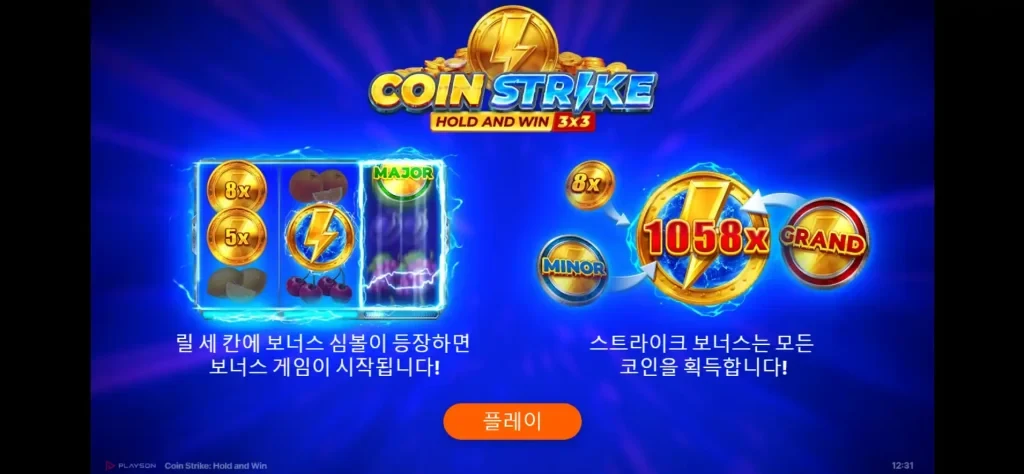
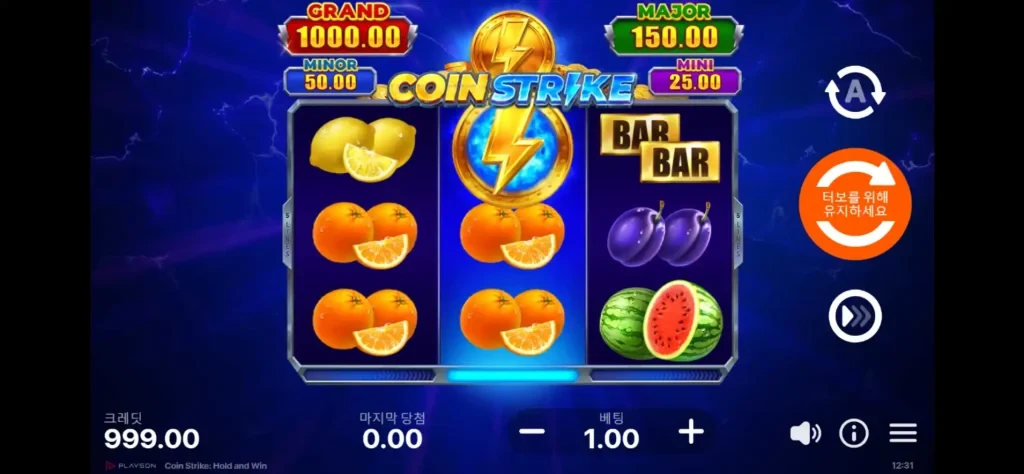
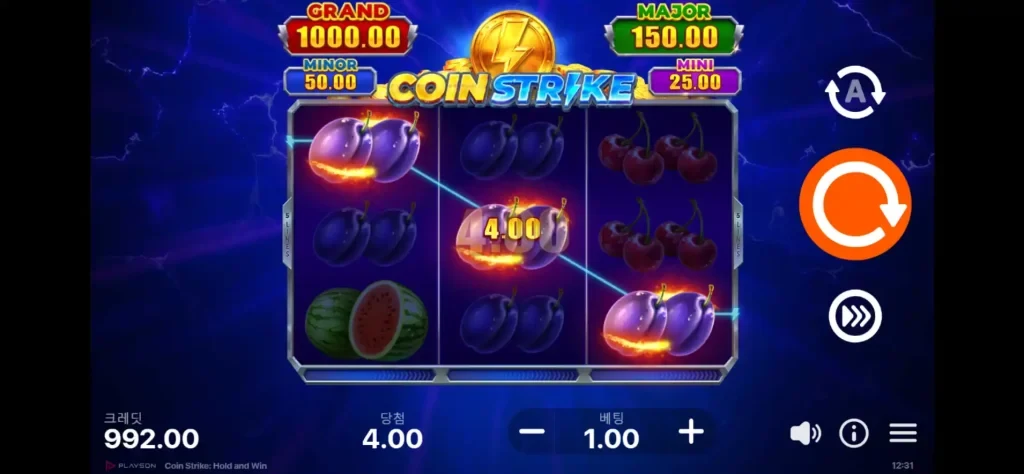
코인 스트라이크 홀드 앤 윈 is a compact 3×3 fruit-style slot where the pace is fast, and the main “feel” comes from coin symbols building into a Hold and Win respin bonus. A Strike bonus symbol can collect coin values through a Coin Strike feature, and the game presentation highlights 5 paylines, 4 in-game jackpots, and Hold and Win as the core loop.
Key Takeaways
- The 3×3 grid and 5 paylines keep outcomes snappy, with frequent quick resolutions before the next spin.
- Hold and Win is the tension engine, coins lock in place and respins try to add more value before the round ends.
- The Strike symbol can trigger a Coin Strike feature that collects values from coin-style symbols, and is described as working in both the main and bonus game.
- RTP, maximum win, and some rule labels can vary by version or venue, so treat the rules screen as the source of truth for what you are actually playing.
Definition
코인 스트라이크 홀드 앤 윈 is a BNG slot that blends classic fruit visuals with a modern Hold and Win coin respin bonus, plus a Strike symbol that can collect coin values via a Coin Strike feature.
What It Means / How It Works
This game tends to play in two distinct tempos.
In the base game, the grid is small, so you get a rapid rhythm of hits and misses. That speed can make variance feel sharper, because long dry spells are not “long” in time, they are long in count, and you notice the stretch of non-events more clearly. Coin symbols interrupt that rhythm with moments that feel like progress, even when the round is still in the base game.
In Hold and Win, the pacing changes. Instead of fast spin-to-spin turnover, you settle into a respin loop where coins lock, the board becomes a “container,” and each new coin feels like it extends the scene. The Strike symbol is the distinctive twist here, it is described as collecting coin values through a Coin Strike feature, and that “collection moment” can make a round feel like it suddenly consolidates value rather than drip-feeding it.
If you want the broader context for how this provider’s Hold and Win style usually reads in-game, Booongo game provider overview gives a practical baseline for feature labels and pacing expectations.
What to Check in the Game Rules Screen (Practical, Non-Promissory)
Use the rules screen to avoid the two most common mistakes, assuming a label means the same thing across all versions, and treating a theoretical metric like a session forecast.
- RTP wording and placement: Some versions show RTP clearly, others only show it in a help menu, and some venues display ranges or “may vary” language. When the number is not explicitly shown, do not assume a specific RTP.
- Paylines confirmation: This game presentation highlights 5 paylines on a 3×3 grid, verify the exact line count in your version so the “hit frequency feel” matches what you expect.
- Hold and Win trigger condition: Look for the exact symbol requirement and whether it must land on a single spin. This directly changes how you interpret near-misses and how often the bonus can realistically show up.
- Respin rules: Confirm starting respins, how respins reset, and whether any special coin types exist. This tells you whether the bonus is more about filling space, or about hunting a few high-value adds.
- Strike and Coin Strike feature scope: Verify what the Strike collects (coin values only, coin plus jackpot symbols, or other variants), and whether the feature is stated to work in both base and bonus. This changes the moment-to-moment “swing feel” because collection effects can compress value into fewer events.
- In-game jackpots definition: The game materials describe 4 in-game jackpots. Check if they are fixed tiers, how they appear, and whether they are restricted to Hold and Win. That prevents misunderstandings like expecting a jackpot outside the stated feature window.
For a provider-level checklist on how to read these labels without over-interpreting them, Booongo rules and feature labels can help you standardize what you look for first.
Quick reference table
| What to verify | Where it appears | What it changes in play |
|---|---|---|
| RTP wording | Help, info, paytable | Long-run concept only, never a session predictor |
| Paylines | Paytable or rules | Why some patterns “feel” more or less common |
| Hold and Win trigger | Feature rules | How to interpret bonus frequency and near-misses |
| Respin mechanics | Bonus rules | Whether the bonus feels short, extended, or reset-heavy |
| Strike collection scope | Feature rules | Why value may arrive in bursts rather than increments |
Common Mistakes / Misconceptions
- RTP equals what happens today: RTP is a statistical long-run measure, short sessions can vary widely in either direction without contradicting the RTP concept.
- Volatility equals bonus frequency: A bonus can appear fairly often while still producing wide result spread, and a rare bonus can still feel steadier if base-game returns are smoother.
- “It is due” thinking: A run of blanks does not make a feature more likely on the next spin, each spin is independent in standard RNG slots.
- Treating Strike as a guarantee: Strike is a collection mechanic, not a promise of profit, and its impact depends on the coin values present when it triggers.
Examples (only if directly clarifying)
- Two sessions with the same bet size can feel totally different. One might show frequent coin moments that keep the pace feeling “busy,” while another might show longer stretches where the game resolves instantly with little happening. That is variance, not proof of a pattern.
- In Hold and Win, “entering the bonus” is not the whole story. The round’s feel is dominated by how many coins lock in, how often respins reset, and whether a collection effect (like Strike) consolidates value in a single event.
Responsible Gambling Note
Slots are high-variance games, and fast-spin formats can make time and spend feel compressed. If you choose to play, practical harm-reduction basics include setting a time limit, setting a loss limit, and stopping when either is reached.
For South Korea support and counselling resources, the Korea Problem Gambling Agency (KPGA) provides help services and operates a national gambling helpline (1336).
Foundational concepts like RTP, volatility, and limit-setting are also summarized in Casino Playing Basics.
FAQ
Is 코인 스트라이크 홀드 앤 윈 a classic slot or a feature slot?
It uses classic fruit visuals and a simple 3×3, 5-payline layout, but the session texture is feature-driven because Hold and Win and coin collection mechanics create most of the “big moments” players notice.
What is the practical difference between coins and the Strike symbol?
Coins are the value units that build the bonus and sit on the grid, while the Strike symbol is described as triggering a Coin Strike feature that can collect coin values. That can make outcomes feel more bursty, because value may be consolidated into fewer events.
How do I confirm this is a Booongo or BNG game?
BNG presents the title as part of its catalogue, and industry provider listings commonly describe BNG as formerly known as Booongo. For internal site structure, Booongo and BNG naming is the safest place to standardize the naming you use in guides.
Resources
- BNG Games, “Coin Strike: Hold and Win”
- BNG Games, “BNG” (official site)
- SOFTSWISS, “BNG (Booongo) – Provider Review & Games”
- Korea Problem Gambling Agency (KPGA), “Overview”
- UK Gambling Commission, “Live return to player performance monitoring of games of chance”