Quick Answer
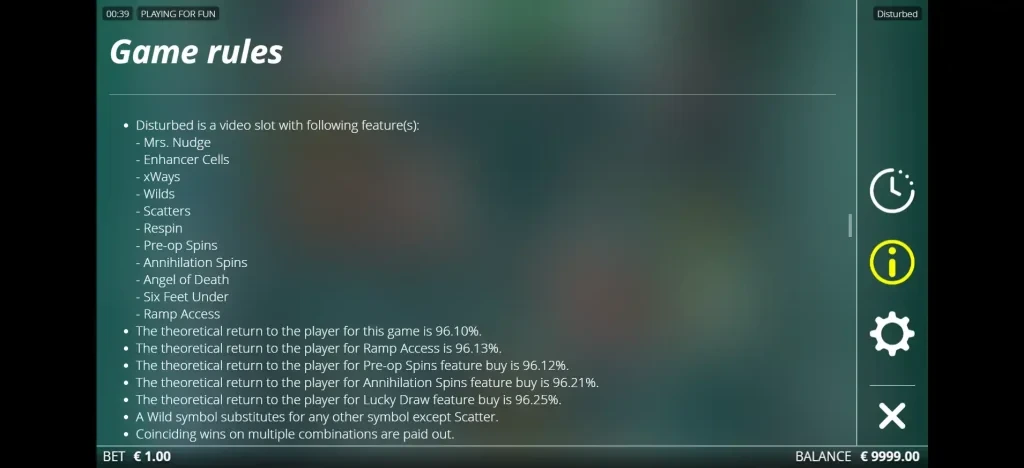
디스터브드 (Disturbed) is a high-volatility NoLimit City slot where the session feel often swings between long, quiet stretches and sudden feature-driven spikes. The official game page lists an RTP of 96.10%, but RTP can vary by version or configuration, so the in-game rules screen is the final reference.
Key Takeaways for 디스터브드
- The base game pacing can feel stop start, with emptier stretches broken by occasional hits, which makes bankroll pressure feel sharper than in steadier games.
- RTP is a long-run average, it does not describe what a single session will return.
- Volatility (when disclosed) is about how outcomes are distributed, high volatility commonly means bigger gaps and rarer, larger spikes in the feel of play.
- In South Korea, gambling law and enforcement context is strict, treat this page as educational gameplay literacy only, not practical guidance.
What 디스터브드 Means / How It Works
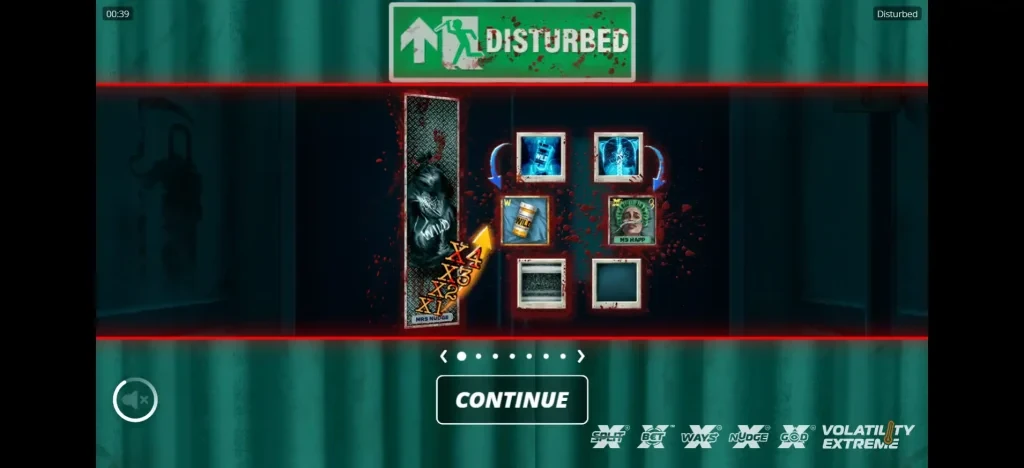
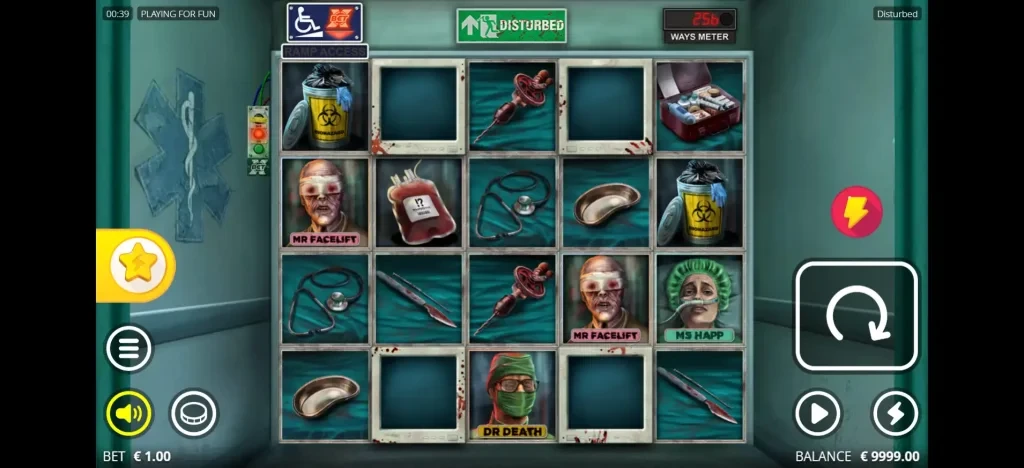
디스터브드 is not a decision-heavy experience in the way blackjack or poker can be. The main “decisions” are really expectation-setting decisions, understanding what the game is built to feel like, and what its labels mean. In a typical session, the base game rhythm can feel sparse, then abruptly “wake up” when a feature sequence lands and multipliers and screen changes stack into a short, intense burst.
NoLimit City’s official presentation for 디스터브드 includes several headline metrics (RTP, volatility, hit frequency, free spins frequency, max win, and max win probability). These are not prediction tools. They are context clues for why the game can feel calm for a while and then suddenly chaotic.
If you are trying to understand the provider’s recurring UI language and how they label risk, NoLimit City provider overview can help you interpret the same terminology across their catalogue without treating any label as a promise.
One more gameplay note is configuration. NoLimit City titles sometimes include options like xBet on their official pages. If your version shows an option like that, treat it as a structural change to the risk profile and payout ceiling, and verify the exact wording inside the rules screen for your build.
What to Check in the Game Rules Screen (Practical, Non-Promissory)
These checks are about verifying what the game says it is, and translating that into session expectations. They are not about “beating” the game.
- RTP wording and the exact number shown
- The official page lists 96.10%. Confirm the same RTP is shown in your rules or info panel, because RTP can vary by version or configuration.
- Keep the meaning straight: RTP is long-run average return, not a session forecast.
- Volatility label (if displayed)
- If the rules screen shows volatility or risk notes, read it as a description of swinginess, not a guarantee of when bonuses arrive.
- High volatility often feels like longer quiet runs with outcomes concentrated in fewer, higher-impact moments.
- Hit frequency and free spins frequency (if listed)
- These numbers are best used as “why this feels like this,” not “what happens next.” A lower bonus frequency can mean the base game stretches feel longer and more draining during a session.
- Maximum win and any probability note
- Max win figures describe an extreme upper tail. If a probability figure is shown, it is a reminder that the top end is rare, not a target.
- For broader provider context on how these labels tend to appear, NoLimit City volatility and RTP context can be useful as a terminology guide.
- Feature buy and bonus mode availability
- The official page indicates feature buy-in and bonus mode as available, but availability and exact implementation can depend on the environment, so verify the on-screen wording and any constraints in your rules panel.
- If your build includes a feature buy, treat it as a direct jump into higher-variance moments, meaning your session can compress risk into a shorter time window.
Quick reference table
| What to verify | Where to find it | What it changes in the feel of play |
|---|---|---|
| RTP (%) | Info panel, rules, paytable | Long-run average only, not a session result predictor |
| Volatility label | Rules, game info | How swingy the session can feel, bigger gaps and spikes |
| Free spins frequency | Rules, game info | How often the session gets “feature breaks” |
| Max win and any probability note | Game info | Keeps expectations grounded, extremes are rare |
| Any configuration option (such as xBet) | Bet settings, rules | Risk profile and payout ceiling wording may change |
Common Mistakes / Misconceptions
- Treating RTP like a refund policy
- RTP does not mean you “get 96% back” in a single sitting. It is an aggregate average over many plays, and short sessions can deviate widely.
- Thinking losing streaks mean a bonus is “due”
- Each spin is not obligated to compensate for earlier outcomes. The “it must hit soon” mindset is a common trap when volatility creates long quiet runs.
- Assuming knowledge turns volatility into control
- Understanding the rules helps you interpret what is happening on screen, it does not convert randomness into a reliable system. Reading provider terminology accurately is still valuable, and NoLimit City rules and UI terminology is where many players clarify what labels actually mean.
Examples (only to clarify)
- Example: What “96.10% RTP” should and should not tell you
- It can help you compare the game’s long-run average return (when the RTP is confirmed in your build).
- It cannot tell you what your next hour will look like. Regulators emphasize RTP as an average concept that does not translate to short-session expectations.
Responsible Gambling Note
High-volatility slots can make session swings feel sharper, because outcomes are more unevenly distributed and quiet stretches can be longer. Setting a time limit and a spending limit before you start is a practical harm-reduction habit, especially when a game includes optional higher-variance features. South Korea’s responsible gambling policy work also frames gambling harm prevention as a public objective, and the broader legal context remains strict, so treat gameplay content as education and risk literacy only.
FAQ
Is 디스터브드 “safer” because the RTP is 96.10%?
Not necessarily. RTP is not a safety grade, it is a long-run average. A high-volatility game can still feel harsh in short sessions, because results can cluster into fewer, higher-impact moments.
Can I reduce volatility by learning the rules?
You can reduce confusion, not volatility. The rules help you understand how features trigger and what labels mean, but they do not change the underlying randomness.
Why include a South Korea context in a gameplay guide?
Because the legal and public policy context is strict and harm prevention is a stated priority. That makes it especially important to treat this content as educational literacy, not as practical play direction.
Resources
- NoLimit City, “Disturbed” (official game page)
- UK Gambling Commission, “Return to player, how much gaming machines payout”.
- National Gambling Control Commission (Korea), “National Master Plan For Responsible Gambling”.
- Chambers and Partners, “Gaming Law 2025, South Korea”.
- Korea Legislation Research Institute (KLRI), “National Gambling Control Commission Act” (English statutes portal).