리액툰즈
Quick Answer
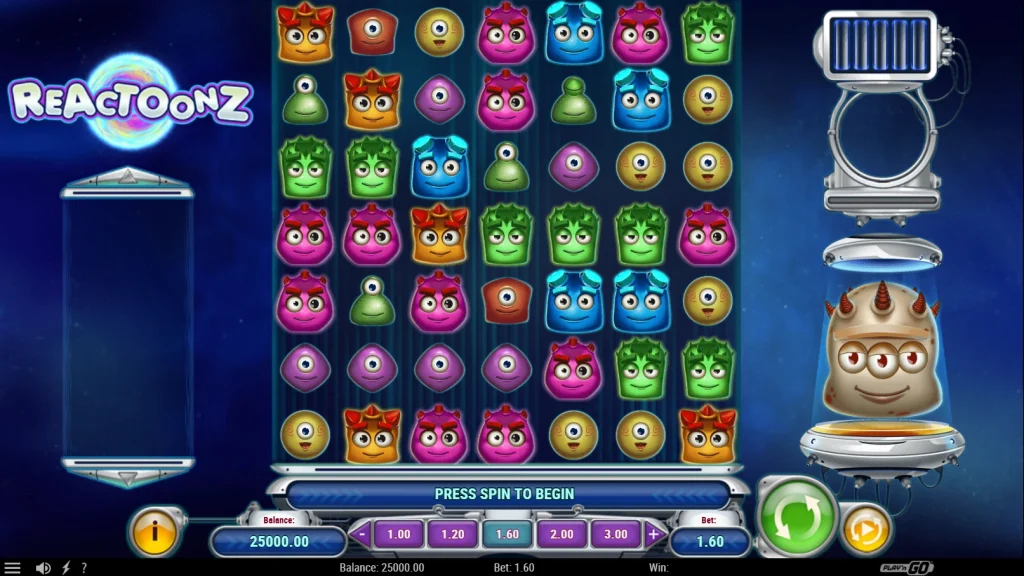
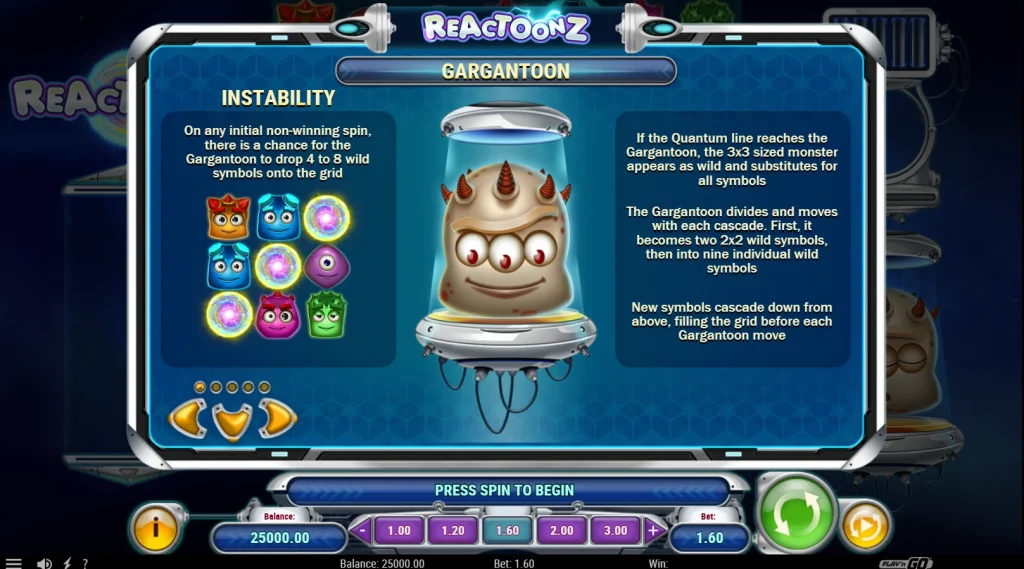
리액툰즈 is a Play’n GO grid slot built around cluster wins, cascading symbols, and feature momentum rather than traditional payline reading. On the official game page, Play’n GO describes it as a 7×7 grid where wins form from clusters of five or more matching aliens, with energy building through play and special features shaping the session flow.
For South Korea readers, the most useful way to understand the game is not as a rules-heavy slot, but as a screen-reading experience. A session often feels quiet at first, then suddenly more active when cascades extend and feature energy builds. That makes the rules screen important, especially for RTP wording, feature labels, and any limit or cap text shown in the game information. Play’n GO and the UK Gambling Commission both frame RTP as a theoretical long-run measure rather than a promise about short sessions.
Key Takeaways
- 리액툰즈 uses a 7×7 grid and pays on clusters of five or more matching symbols.
- The gameplay rhythm is shaped by cascading reactions, so one spin can continue through several screen updates before stopping.
- The main appeal is the sense of feature buildup, not just isolated single-spin results. Play’n GO highlights energy collection and special feature interaction as core parts of the game.
- RTP should be read as a theoretical long-run figure, not a prediction for one session, one day, or one device.
- A run of quiet spins does not mean a win is due. Responsible Gambling Council guidance warns against myths like being “due” after previous results.
- Session limits and time awareness matter, especially in games with long cascade chains and strong visual momentum. Play’n GO says its safer gambling approach includes in-game tools and player protection measures.
What It Means / How It Works
The easiest way to describe 리액툰즈 is that it feels more like a reacting board than a classic reel strip. Instead of following paylines across fixed rows, you are watching a 7×7 grid for connected groups of symbols. When five or more matching aliens land together, the cluster pays, disappears, and new symbols fall into place. This gives the game a rolling pace where a single paid result can become a longer sequence rather than a quick stop-start spin. That kind of pacing also fits naturally within Play’n GO slot gameplay patterns.
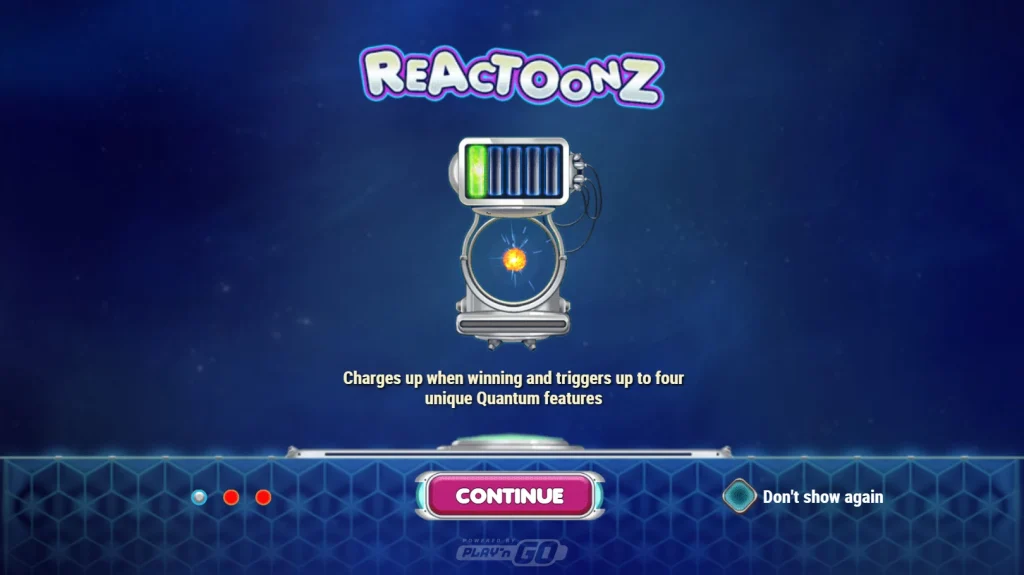
Play’n GO’s official description also emphasizes energy build-up and special feature involvement, which is why the game often feels like it is moving toward something rather than simply repeating independent line checks. In practice, that means many sessions are defined by contrast. Some stretches feel flat and low-event, then a later chain becomes visually busy and mechanically important. That reading style is one reason Play’n GO feature-driven slot structure is a helpful parent topic for this game.
For South Korea readers using PC, Mobile, or PC Online formats, the core structure does not change, but the feel can. On PC, the whole grid and the feature transitions are easier to track. InMobile, the pace can feel denser because the screen is tighter and the reactions appear more concentrated. On PC Online, it is usually easier to compare the active screen with the rules panel at the same time, which matters in a game where feature interpretation affects how the session feels.
What to Check in the Game Rules Screen (Practical, Non-Promissory)
Before treating the game as “high action” or “cold,” it helps to read the rules screen like a session guide.
- Cluster requirement
The core check is the win condition itself. Play’n GO states that wins come from clusters of five or more matching aliens. If you do not confirm that first, it becomes easy to overreact to near-clusters that looked promising but were never winning combinations. - Feature names and symbol roles
Official provider terminology matters because visual effects can be easy to misread. If the rules screen labels a feature or symbol clearly, you can separate normal grid movement from moments that actually change the payout structure or trigger enhanced reactions. That is also why Play’n GO rules and feature labels belongs naturally in the reading path for this title. - RTP wording
The UK Gambling Commission defines theoretical RTP as the designed or advertised percentage shown in player-facing rules, while actual RTP is what emerges in live operation over time. For a player, the practical takeaway is simple. RTP is a long-run mathematical description, not a forecast of what the next 20 or 50 spins will look like. - Any volatility clues
Not every game will show volatility in the same way, and some versions may be more explicit than others. When direct disclosure is limited, the player has to read the structure instead. A cluster grid with cascades, build-up mechanics, and feature-led bursts often feels swingier than a simpler, flatter game cycle. That does not predict outcomes, but it does help explain session texture. - Caps, limits, and tool visibility
Play’n GO’s safer gambling page says the company supports player protection with measures that include in-game tools and governance around safer play. From a practical point of view, that matters because long cascade sequences and “almost active” sessions can stretch time awareness. For that reason, Play’n GO safer play framework is relevant even on a single-game page.
Quick Reference Table
| Check | Why it matters | What it changes in play |
|---|---|---|
| Cluster size requirement | Confirms the real win condition | Reduces false “almost hit” impressions |
| Grid format | Explains how the board should be read | Shifts attention from paylines to groups |
| Feature labels | Clarifies which moments actually alter the board | Helps separate animation from meaningful events |
| RTP wording | Puts the return figure in proper context | Prevents short-session overconfidence or frustration |
| Cap or limit wording | Shows whether there are payout constraints | Keeps visual excitement separate from assumptions |
| Time and session tools | Supports control during longer sessions | Helps manage pace and stopping points |
Common Mistakes / Misconceptions
One common mistake is treating RTP as a short-session indicator. The Gambling Commission explains that theoretical RTP is the designed long-run return shown in the rules, while actual outcomes fluctuate in live play. In plain terms, a quiet session does not prove the RTP is poor, and a lively session does not prove the game is generous.
Another mistake is believing the game is “due” after a string of dead or low-event spins. Responsible Gambling Council guidance directly addresses this kind of myth. Previous spins do not create a debt that the next spin has to repay. In a game like 리액툰즈, where feature momentum is part of the appeal, that misconception can become stronger because the board often looks like it is building toward something.
A third mistake is reading near-clusters as meaningful signals. Because the board is active and symbol groupings are visually dense, it is easy to remember the almost-wins more vividly than the actual probabilities justify. That is one reason Casino Playing Basics fits naturally into this page. The game becomes easier to read when cluster mechanics, long-run RTP, and gambler’s fallacy are understood together rather than separately.
Examples
A short session might produce several small cluster events without ever feeling fully active. A player may come away thinking the game “never really started,” even though the structure was working exactly as designed. That is the gap between session feeling and theoretical RTP. The math behind long-run return does not promise a dramatic feature cycle in every short play window.
The reverse can also happen. A single cascade chain can be long, busy, and memorable enough to make the entire session feel stronger than it really was overall. That does not mean the next session, or even the next few spins, are more likely to repeat the same pattern. Responsible Gambling Council guidance on myths is useful here because it pushes back against reading momentum as destiny.
Responsible Gambling Note
Games with cascading sequences and strong feature momentum can blur time more easily than flatter game cycles. Play’n GO says its safer gambling work includes player protection measures and a structured safer gambling approach, while the Gambling Commission’s public guidance also points players toward safer gambling information and support. For South Korea readers, the practical takeaway is to set a time boundary and loss limit before starting, and to stop when that limit is reached rather than extending the session because the board “feels close.”
FAQ
What makes 리액툰즈 different from a standard slot?
The main difference is that it is read as a cluster grid rather than as a payline machine. The official Play’n GO page describes a 7×7 format where groups of five or more matching aliens create wins, and those wins can continue through cascades. That gives the game a more reactive, chain-based flow than a standard one-stop reel result.
Is 리액툰즈 a high RTP game?
The better answer is that you should check the RTP shown in the game rules and interpret it correctly. Theoretical RTP is the designed long-run return displayed to players, not a promise about your current session. A game can feel cold or active in the short term without contradicting its theoretical RTP.
Does Mobile play feel different from PC?
Yes, in terms of feel, though not in the basic mathematical structure. On PC, the whole grid and the chain reactions are usually easier to watch at once. On Mobile, the same action can feel faster and denser because of the smaller screen. On PC Online, it is often easier to compare live play with the information panel, which is useful in a game tied closely to feature reading and rules interpretation. That broader context also fits well with Play’n GO game overview.
Resources
- Play’n GO, Reactoonz Slot Demo
- Play’n GO, SAFER GAMBLING
- UK Gambling Commission, Live return to player performance monitoring of games of chance
- UK Gambling Commission, Key terms relating to live return to player performance monitoring of games of chance
- Responsible Gambling Council, Common Myths about Gambling